
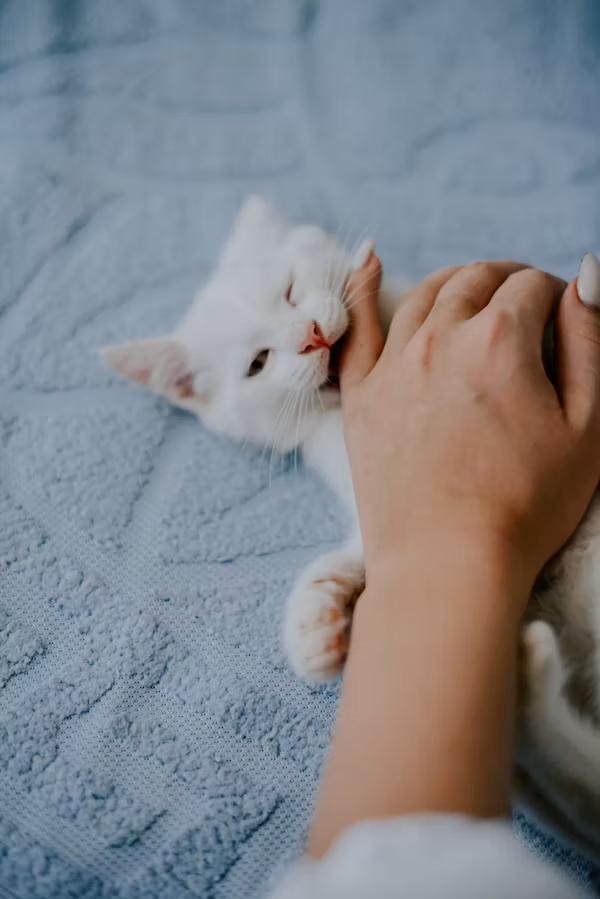
You are sitting with your cat, gently stroking their head. They are relaxed, maybe even purring, and everything seems perfectly peaceful.
Then suddenly, you feel a tiny pinch.
Your cat has gently bitten your hand.
It does not really hurt. They do not seem angry. A moment later, they may even continue sitting beside you as if nothing happened.
So naturally, you wonder: Why does my cat bite me gently?
Gentle biting is surprisingly common in cats, and it does not always mean the same thing. Sometimes it can be a social gesture or a form of affection. Other times, it can mean your cat is becoming overstimulated, wants the interaction to change, or simply feels playful.
The most useful clue is not the bite itself. It is everything happening before, during, and after the bite.
Why Does My Cat Bite Me Gently?
A gentle bite can have several meanings, including:
- affection or social bonding
- playfulness
- attention-seeking
- overstimulation during petting
- communication or setting a boundary
- curiosity
- frustration
Veterinary sources note that so-called “love bites” are usually gentle and do not break the skin, but the behavior can also be connected to play, frustration, or overstimulation.
That is why it is better not to automatically assume that every gentle bite means, “I love you.”
Sometimes your cat is being affectionate.
Sometimes your cat is saying, “That is enough now.”
Learning the difference can make your interactions much easier.
1. Your Cat May Be Showing Affection
Some cats use their mouths as part of social interaction.
You may notice your cat gently nibbling your fingers, hand, or arm while they are relaxed and comfortable around you. The bite may be very light, and they may follow it with licking, rubbing against you, purring, or simply settling back down. If you have ever wondered why cats also lick their humans as part of their social behavior, you can read Why Does My Cat Lick Me?.
This can be part of a friendly interaction.
Cats also use grooming and gentle physical contact as social behaviors with other cats. When a cat treats you as part of their trusted social environment, some of those behaviors may appear in their interactions with you.
This is one reason people often call these little nips “love bites.”
The nickname can be useful, as long as you remember that it is not a scientific explanation for every gentle bite.
Your cat may be expressing affection, but context matters.
2. Your Cat May Be Telling You That They Have Had Enough Petting
This is one of the most important possibilities to understand.
A cat can enjoy being petted and still reach a point where they no longer want to be touched.
It may seem strange from a human perspective.
Your cat comes to you.
You pet them.
They purr.
Then they bite you.
What happened?
Sometimes, nothing dramatic happened. Your cat simply reached their individual tolerance limit.
This is often called petting-induced aggression or petting-induced biting. The bite may be relatively gentle at first, almost like a warning, before the cat becomes more uncomfortable.
Veterinary guidance describes this as a situation where a cat may initially enjoy physical contact but eventually become overstimulated or uncomfortable.
The lesson is simple:
Purring does not necessarily mean your cat wants unlimited petting.
Every cat has their own tolerance for touch.
3. Your Cat May Be Overstimulated
Imagine someone repeatedly rubbing the same spot on your arm for several minutes.
At first, it might feel pleasant.
Eventually, you might want them to stop.
Cats can experience something similar with prolonged petting.
The sensation that initially felt good can become irritating when it continues for too long or happens in a sensitive area.
A gentle bite may be your cat’s way of communicating that they have reached their limit.
You may notice other signals before the bite, such as:
- a twitching or flicking tail
- ears moving backward or sideways
- a sudden change in body tension
- skin rippling along the back
- turning the head toward your hand
- trying to move away
- becoming restless
These signs can be easy to miss because they are much quieter than a hiss or growl.
But they matter.
The earlier you notice them, the easier it is to stop the interaction before your cat feels the need to bite.
4. Your Cat May Be Playing
Cats are natural hunters, and biting is a normal part of feline play.
If your cat grabs your hand, gently bites it, kicks with their back legs, or immediately tries to chase or wrestle, the behavior may be playful rather than affectionate.
This is particularly common with young cats and energetic cats.
The problem is that your hand can accidentally become a toy.
If you regularly allow your cat to chase, grab, and bite your fingers during play, they may learn that human hands are appropriate things to attack.
That can become less cute when the cat gets older and stronger.
Instead, use toys that give your cat something appropriate to chase, grab, and bite.
Wand toys, small toys, and other interactive options can help direct hunting behavior away from your hands.
5. Your Cat May Want Your Attention
Sometimes a gentle bite is simply an effective way to make you pay attention.
Your cat may have learned that touching you with their teeth gets a reaction.
Maybe you immediately look at them.
Maybe you talk to them.
Maybe you start petting them again.
From your cat’s perspective, the strategy worked.
This does not necessarily mean your cat is being manipulative in the human sense. Cats learn from repeated interactions and consequences.
If gentle biting consistently produces attention, the behavior can become part of your cat’s communication routine.
Pay attention to what happens immediately afterward.
If your cat bites gently and then looks at you, rubs against you, meows, or leads you toward something, they may be trying to start an interaction.
6. Your Cat May Be Setting a Boundary
Not every cat enjoys being touched in the same places.
Some prefer the cheeks, chin, and area around the ears. Others tolerate more handling. Many cats are less comfortable with prolonged touching around the belly, tail, or other sensitive areas.
A gentle bite can sometimes mean:
“Please stop doing that.”
This is especially likely if your cat bites when you touch one particular area.
Instead of continuing to pet them to see what happens, stop and give them space.
Cats often communicate discomfort through body language before they escalate.
Respecting that communication can help your cat feel safer and can reduce the chance of a stronger bite later.
Why Does My Cat Bite Me When I Pet Him?
This is one of the most confusing versions of the behavior because your cat may appear to be enjoying the interaction.
They may approach you.
They may purr.
They may rub against you.
Then they bite.
In many cases, the explanation is overstimulation.
Your cat may have wanted some affection but not as much as you were giving.
Veterinary behavior guidance recommends watching for subtle signs that a cat is becoming uncomfortable, including tail movement, changes in the ears, tension, or attempts to move away.
Try shorter petting sessions and pause occasionally.
If your cat moves closer and asks for more, continue.
If they move away, become tense, or show warning signals, let them have a break.
This approach allows your cat to have more control over the interaction.
Why Does My Cat Bite Me While Purring?
This is another behavior that can be confusing.
You might think:
“My cat is purring, so why are they biting me?”
Because purring does not tell the entire story.
Cats can purr during positive social interactions, but the sound should be considered together with the rest of their body language.
If your cat is relaxed, loose-bodied, leaning into your hand, and giving gentle nips without showing signs of distress, the biting may be part of a pleasant interaction.
But if the tail begins flicking, the ears shift backward, the body becomes tense, or your cat starts trying to move away, the purring should not be interpreted as permission to continue petting.
Watch the whole cat, not just the purr.
How Can You Tell If It Is a Love Bite or a Warning?
The easiest way is to look at the entire interaction.
A gentle social bite may look like:
- light pressure
- no broken skin
- relaxed body
- relaxed ears
- soft eyes
- continued closeness
- licking or rubbing before or after the bite
- no attempt to escape
A warning bite may come with:
- tail flicking or rapid movement
- flattened or rotated ears
- tense muscles
- skin twitching
- turning sharply toward your hand
- trying to leave
- growling or hissing
The difference is not always obvious, especially because cats can communicate very subtly.
But learning your individual cat’s signals can make a big difference.
What Should You Do When Your Cat Bites You Gently?
The best response depends on why your cat is biting.
If the behavior appears playful, redirect the cat toward an appropriate toy.
If the bite happens during petting, stop petting for a moment and give your cat space.
If the cat is showing signs of overstimulation, shorten future petting sessions and pay closer attention to their body language.
And avoid physically punishing your cat.
Hitting, pushing, shouting, or frightening a cat is unlikely to teach them what you want and can make them more fearful or defensive. Veterinary and animal welfare guidance recommends using redirection and respecting the cat’s signals instead.
The goal is not to punish the bite.
The goal is to understand what came before it.
What If My Cat Suddenly Starts Biting Me?
A sudden change in behavior deserves more attention than a long-standing habit.
If your cat has always given occasional gentle nips and otherwise behaves normally, it may simply be part of their personality.
But if a previously tolerant cat suddenly becomes sensitive to touch, starts biting when you touch a particular area, or shows other changes in behavior, pain or illness should be considered.
Pain can make a cat less tolerant of handling. Veterinary sources recommend having a cat evaluated when biting or aggression appears suddenly, particularly if there are other signs of discomfort. You can learn more about the different reasons cats may give these gentle bites in this PetMD guide to cat love bites.
Watch for other changes too, such as reduced appetite, hiding, changes in grooming, unusual vocalization, difficulty moving, or changes in litter box behavior.
You do not need to assume that something is seriously wrong.
But a sudden behavioral change is worth paying attention to.
What If the Bite Breaks the Skin?
A truly gentle bite usually does not break the skin.
If your cat bites hard enough to puncture or break the skin, treat it more seriously. Cat bites can introduce bacteria and may become infected.
Clean the wound promptly and seek appropriate medical advice, especially if the bite is deep, painful, swollen, or located on the hand or near a joint.
And remember that a hard bite is different from the small, controlled nibbles people often describe as “love bites.”
The Best Way to Understand Your Cat’s Little Bites
The next time your cat gently bites you, try not to focus only on the teeth.
Look at the whole situation.
Were you petting your cat for a long time?
Did your cat approach you first?
Were they relaxed or tense?
Did their tail start moving?
Did their ears change position?
Did they stay close afterward or immediately walk away?
These details can tell you much more than the bite itself.
Cats have many ways of communicating, and sometimes their messages are surprisingly subtle.
A gentle bite might mean “I like you.”
It might mean “Play with me.”
It might mean “Pay attention to me.”
Or it might simply mean “Okay, that is enough petting for now.”
Learning which message your own cat is sending is part of getting to know their personality.
So, Why Does My Cat Bite Me Gently?
A cat may gently bite you because they are showing affection, playing, asking for attention, communicating a boundary, or becoming overstimulated by touch.
There is no single meaning that applies to every cat.
The most important clue is your cat’s body language and the circumstances surrounding the bite.
If your cat is relaxed and the bite is gentle, it may be nothing more than a quirky part of your relationship.
But if your cat becomes tense, tries to escape, shows signs of fear, or suddenly starts biting when they never did before, take the behavior more seriously.
Your cat may not be trying to be difficult.
They may simply be communicating in the only way they know how.
And once you learn to listen to those tiny signals, those mysterious little bites can become a lot less mysterious.