
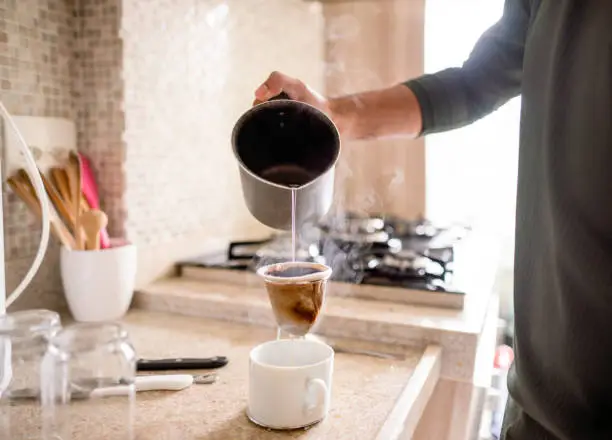
There is something strangely comforting about making coffee on the stovetop.
Maybe it is because you can hear the water heating, smell the coffee almost immediately, and watch the whole thing come together right in front of you. And if your coffee maker suddenly stops working, the stovetop can become more than just a backup plan.
You can actually make a good cup of coffee with a saucepan, ground coffee, water, and a little patience.
So, how do you make coffee on the stovetop without a coffee maker?
The simplest method is to heat water in a saucepan, add ground coffee, let it steep gently, and then pour the coffee slowly into your cup while leaving the grounds behind.
It is not exactly the same as using a traditional coffee maker, but it works surprisingly well.
What You Need
You do not need special equipment for this method.
You will need:
- Water
- Ground coffee
- A small saucepan or pot
- A spoon
- A cup or mug
- A fine-mesh strainer, if you have one
A strainer is helpful, but it is not absolutely necessary. If you do not have one, you can carefully pour the coffee and leave most of the grounds at the bottom of the saucepan.
For one cup, a good starting point is about 1 cup of water and 1 to 2 tablespoons of ground coffee.
You can adjust the amount depending on how strong you like your coffee.
How to Make Coffee on the Stovetop
1. Heat the Water
Pour the amount of water you want into a saucepan and place it on the stove.
Heat the water until it is very hot and just beginning to simmer.
You do not need to keep the water at a vigorous boil. In fact, aggressively boiling the coffee can make the flavor harsher and more bitter.
If the water starts bubbling strongly, simply lower the heat.
2. Add the Ground Coffee
Once the water is hot, add your ground coffee directly to the saucepan.
Give it a gentle stir so the grounds become fully wet.
At this point, the kitchen will probably start smelling like coffee, which is usually a good sign that breakfast is getting better.
3. Let It Steep
Lower the heat and let the coffee steep gently for about 3 to 5 minutes.
There is no need to stir constantly.
The longer the coffee sits, the stronger and more intense it will become. If you prefer a milder cup, stay closer to three minutes. If you like stronger coffee, you can let it steep a little longer.
The important thing is to avoid keeping it at a hard boil.
4. Turn Off the Heat
When the coffee has reached the strength you want, remove the saucepan from the stove.
Let it sit for about a minute.
This small pause gives the coffee grounds a chance to settle toward the bottom of the pan, making the next step easier.
5. Pour the Coffee Slowly
Now comes the part that requires a little attention.
Slowly pour the coffee into your mug.
If you have a fine-mesh strainer, place it over the cup and pour the coffee through it. This will catch most of the grounds.
If you do not have a strainer, pour slowly and stop before the grounds at the bottom of the saucepan reach the edge.
A few tiny coffee grounds may still make it into the cup. That is perfectly normal with this method.
Can You Boil Coffee Directly on the Stove?
Yes, you can, but there is a difference between heating coffee on the stove and keeping it at a rolling boil.
If you allow coffee and water to boil aggressively for several minutes, the resulting drink can taste stronger, more bitter, and less pleasant.
A gentler approach is usually better.
Think of the stovetop as a way to control the heat rather than as a reason to boil the coffee as hard as possible.
Once the water is hot, reduce the heat and give the coffee time to extract.
How Much Coffee Should You Use?
There is no single amount that works for everyone.
A useful starting point is:
1 to 2 tablespoons of ground coffee for every cup of water.
If your coffee tastes weak, increase the amount of coffee next time.
If it tastes too strong or bitter, try using slightly less coffee or shortening the steeping time.
The grind also matters. Medium-ground coffee is generally easier to work with because very fine grounds can make the drink muddy and harder to strain.
What If You Don’t Have a Strainer?
You can still make coffee.
This is one of the reasons the stovetop method is useful when you are working with very limited equipment.
After removing the saucepan from the heat, wait a little longer so the grounds can settle.
Then pour the coffee very slowly into your cup.
Try not to shake or stir the saucepan before pouring. The more the grounds move around, the more likely they are to end up in your mug.
You can also use a clean paper filter if you have one available. Place it inside a suitable strainer or carefully hold it over the cup while pouring.
Just make sure the filter is supported properly so it does not collapse into the mug.
Can You Use Instant Coffee on the Stovetop?
You can heat the water on the stovetop and then add instant coffee once the water is hot.
However, instant coffee does not need to be boiled or steeped like ground coffee.
Simply heat the water, remove it from the heat, and mix in the instant coffee according to the amount you prefer.
The stovetop method described above is mainly useful when you have ground coffee but no coffee maker.
Is Stovetop Coffee the Same as Coffee Made in a Coffee Maker?
Not exactly.
A traditional coffee maker controls the flow of hot water through the coffee grounds in a different way. With the stovetop method, the grounds are directly immersed in the water.
That changes the texture and flavor of the finished drink.
Stovetop coffee can have a fuller, heavier taste, and you may notice a little sediment in the bottom of the cup.
But that does not mean it is bad coffee.
Sometimes the goal is simply to make a good cup with whatever you have available.
And for that, a saucepan can do a surprisingly good job.
How to Make Stovetop Coffee Less Bitter
If your coffee comes out bitter, you do not necessarily need a different type of coffee.
Start by changing the preparation.
Try these adjustments:
- Do not keep the coffee at a hard boil.
- Reduce the steeping time.
- Use slightly less coffee.
- Use fresh water.
- Avoid stirring the grounds repeatedly.
- Try a medium grind instead of very fine grounds.
Temperature and time both affect extraction, so small changes can make a noticeable difference.
You may need a little experimentation before finding the combination you like.
What If Your Coffee Maker Is Broken?
That is probably the most obvious reason to try this method.
You wake up, reach for the coffee maker, and discover that it is not working.
For a moment, it feels like the morning has been ruined.
But if you have ground coffee and a saucepan, it really has not.
The stovetop method is one of several ways to make coffee without a traditional coffee maker. You can also use other simple techniques depending on what you have in your kitchen.
If you want to see a broader selection of methods, take a look at our guide on how to make coffee without a coffee maker.
And if you are wondering what other everyday objects or methods can replace a coffee maker, our guide to what you can use instead of a coffee maker explores several possibilities.
A Simple Method That Actually Works
Making coffee on the stovetop without a coffee maker is not complicated.
Heat the water, add the ground coffee, let it steep gently, allow the grounds to settle, and pour slowly.
That is really the whole idea.
The first time you try it, you may have to adjust the amount of coffee or the steeping time. But once you find the combination you like, you will know that a broken coffee maker does not necessarily mean a coffee-free morning.
Sometimes all you really need is a saucepan and a few extra minutes.
And there is something nice about that.
A cup of coffee does not always require a machine. Sometimes, it just requires knowing another way to make it.