
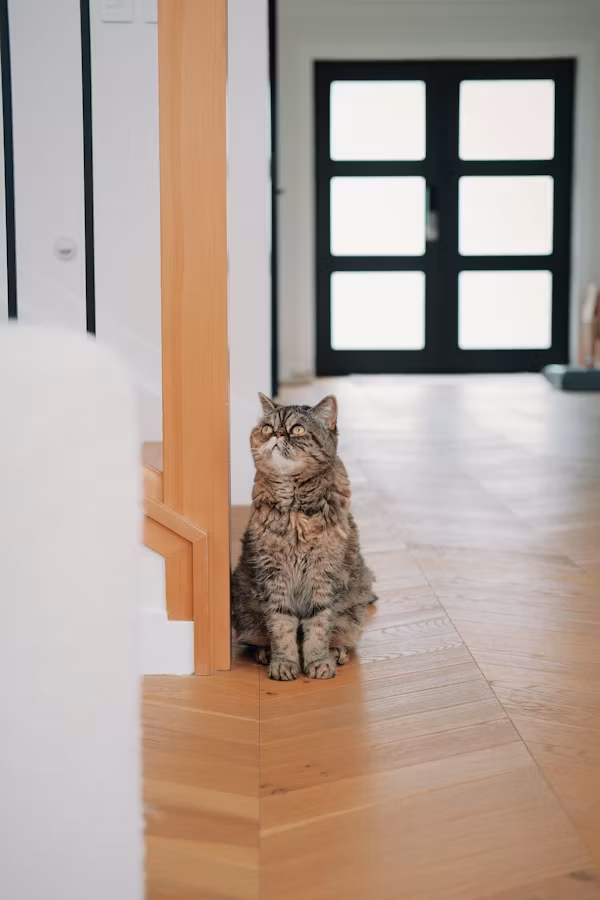
You know your cat’s usual habits. The way they walk into the room, where they like to sleep, how they ask for food, and even the little sounds they make when they want your attention.
That is why it can be so noticeable when something suddenly seems different.
Maybe your cat is racing through the house for no obvious reason. Maybe they are hiding under the bed, following you everywhere, meowing more than usual, or staring at something you cannot see. Sometimes these behaviors are simply part of being a cat. Other times, a sudden change can be a sign that something in their environment—or in the way they feel—has changed.
So, why is my cat acting weird?
The answer depends less on whether the behavior looks strange to us and more on what is normal for your particular cat, what has changed recently, and whether the behavior continues.
Why Does My Cat Suddenly Act Weird?
Cats are creatures of habit. Even small changes around them can affect their behavior.
A different piece of furniture, a new smell in the house, unfamiliar people, another animal, a change in your schedule, or even construction noise outside can make a cat behave differently.
Stress can also show up in ways that seem unusual. A cat may hide more, become unusually clingy, avoid a particular room, vocalize more often, or suddenly spend much more time running around.
Sometimes, however, there is no obvious environmental explanation. Cats can also have moments of excitement, curiosity, fear, or intense focus that look completely strange from a human perspective.
The first question to ask is therefore not, “Is this weird?”
It is:
“Is this different from what my cat normally does?”
That distinction can tell you much more.
Common Weird Cat Behaviors That Can Be Normal
Cats have plenty of behaviors that look bizarre to us but are perfectly ordinary for them.
Suddenly Running Around the House
The classic zoomies can appear almost out of nowhere.
Your cat may suddenly sprint from one room to another, jump onto furniture, chase an imaginary target, and then stop as if nothing happened.
This can happen because of pent-up energy, playfulness, excitement, or simply because your cat feels like moving.
If your cat otherwise seems comfortable, eats normally, uses the litter box normally, and returns to their usual behavior afterward, an occasional burst of energy is generally not something to find alarming.
Staring at Something You Cannot See
A cat staring at an empty corner can feel mysterious, especially when they seem completely focused on it.
But cats notice things we often miss. Their hearing and vision are different from ours, and a tiny movement, faint sound, reflection, insect, or unfamiliar noise may capture their attention.
What looks like staring at nothing may simply mean your cat has noticed something you haven’t.
Meowing More Than Usual
Cats use vocalization for many reasons.
Some are naturally talkative, while others are relatively quiet. A cat may meow because they want food, attention, play, access to a room, or because something has caught their interest.
The important part is a change from their normal pattern.
If a normally quiet cat suddenly becomes very vocal, it is worth paying attention to what else is happening at the same time.
Sleeping in Strange Positions
Cats are remarkably creative sleepers.
They may curl themselves into impossible-looking shapes, sleep with their head hanging over the edge of a bed, stretch across a chair, or suddenly choose a completely different sleeping place.
An unusual sleeping position by itself does not necessarily mean something is wrong. Cats often choose positions based on comfort, temperature, security, and whatever spot happens to feel good at that moment.
Becoming Suddenly Clingy
A cat that normally enjoys some independence may suddenly follow you from room to room.
Sometimes this simply means they want company.
Changes in routine can also make cats seek reassurance. If something unfamiliar has happened in the household, your cat may temporarily stay closer to you because you represent something familiar.
Again, the important clue is whether this is a temporary change or part of a larger pattern.
Why Cats Suddenly Change Their Behavior
When a cat starts acting differently, look around before assuming there is a serious problem.
Think about what has changed recently.
Changes in Routine
Cats often become accustomed to predictable routines.
If you are leaving home at different times, feeding them on a new schedule, spending more or less time at home, or changing their usual routine, your cat may react to that change.
Even when the change seems small to you, your cat may notice it immediately.
New People or Animals
A new person visiting the house, a new pet, or even another animal appearing outside a window can affect a cat’s behavior.
Some cats become curious. Others hide. Some become more vocal or stay unusually close to their owners.
Their reaction does not necessarily mean something is wrong. It may simply be their way of responding to an unfamiliar situation.
New Smells and Sounds
Cats live in a world of scents and sounds that humans experience very differently.
A new cleaning product, furniture, food, object, or smell brought into the house can attract attention or create uncertainty.
Loud noises and unfamiliar sounds can have a similar effect.
Stress and Changes in the Environment
Moving furniture, having visitors, renovating a room, changing where food or litter is kept, or introducing another animal can all change how a cat behaves.
A stressed cat may become quieter, hide more often, become more vocal, or behave differently toward people.
That is why looking at the whole situation is more useful than focusing on one strange behavior.
When Weird Cat Behavior May Mean Something Is Wrong
Not every unusual behavior is harmless.
The biggest reason to pay attention is a sudden and persistent change, especially when several changes appear together.
For example, a cat that suddenly starts behaving differently and also stops eating, drinks much more or less than usual, changes litter box habits, hides much more, seems unusually tired, becomes aggressive, or appears uncomfortable deserves closer attention.
You should also take notice if your cat seems to be in pain or if a behavior that is completely unusual for them continues without an obvious explanation.
This does not mean that a strange behavior automatically points to a specific illness. There are many possible explanations, and behavior alone cannot tell you what is happening.
But significant or persistent changes are a good reason to speak with a veterinarian rather than trying to diagnose the problem yourself.
How to Tell What Is Normal for Your Cat
One of the best ways to understand cat behavior is to know your cat’s baseline.
Every cat has its own personality.
One cat may greet everyone who walks through the door. Another may disappear immediately. One may spend the evening racing around the house, while another prefers to sleep for hours.
There is no single definition of “normal” that applies perfectly to every cat.
Pay attention to your cat’s usual:
- appetite and drinking habits
- sleeping patterns
- litter box routine
- activity level
- grooming habits
- vocalization
- social behavior
- favorite places
- reactions to people and other animals
Once you know those patterns, changes become much easier to recognize.
This is also why a behavior that looks strange in one cat may be completely ordinary in another.
What Should You Do If Your Cat Suddenly Acts Weird?
Start by observing rather than immediately assuming the worst.
Think about when the behavior started and what happened around that time.
Ask yourself:
- Has anything changed in the house?
- Has your daily routine changed?
- Has someone new arrived?
- Is there a new pet or animal nearby?
- Have there been unusual noises or smells?
- Is your cat eating and drinking normally?
- Are litter box habits unchanged?
- Does your cat seem comfortable?
- Does the behavior come and go, or is it becoming constant?
If you find an obvious environmental change, give your cat some time and a calm, familiar space.
Avoid forcing interaction if your cat is hiding or seems nervous. Keeping routines predictable can also help.
If the behavior is sudden, persistent, accompanied by other concerning changes, or your cat appears unwell or in pain, contacting a veterinarian is the safest next step.
The goal is not to label every unusual behavior as a problem. It is to recognize when “weird” is simply your cat being your cat—and when it represents a meaningful change.
Frequently Asked Questions
Why is my cat acting weird all of a sudden?
A cat may suddenly behave differently because of changes in routine, new people or animals, unfamiliar smells or sounds, stress, excitement, fear, or other changes in their environment. If the change is sudden and persistent, especially when accompanied by other unusual signs, it is worth paying closer attention.
Why is my cat acting weird and scared?
Fear can make a cat hide, stay close to a familiar person, become unusually quiet, vocalize, or avoid certain places. Look for recent changes or anything that could have frightened your cat, such as unfamiliar people, animals, noises, or smells.
Why is my cat acting weird and meowing a lot?
Increased vocalization can have many explanations. Your cat may want attention, food, play, or access to something, but a noticeable change from their normal vocal behavior should also be observed alongside eating, drinking, litter box use, activity, and other behaviors.
How do I know if my cat is acting weird?
The best comparison is your cat’s own normal behavior. If your cat suddenly behaves differently from their established routine—especially if the change persists or several unusual behaviors appear together—that is more meaningful than simply doing something that looks strange to a person.
Final Thought
Living with a cat means accepting that some of their behavior will always seem a little mysterious.
A sudden sprint across the living room, an intense stare at an apparently empty wall, an unusual sleeping position, or a sudden desire to follow you everywhere may simply be another example of how wonderfully strange cats can be.
But your cat’s normal behavior is your most useful reference point.
When something changes, pay attention to the change—not just to how strange the behavior looks.
Sometimes your cat is simply being a cat.
And sometimes, that small difference is worth noticing.