
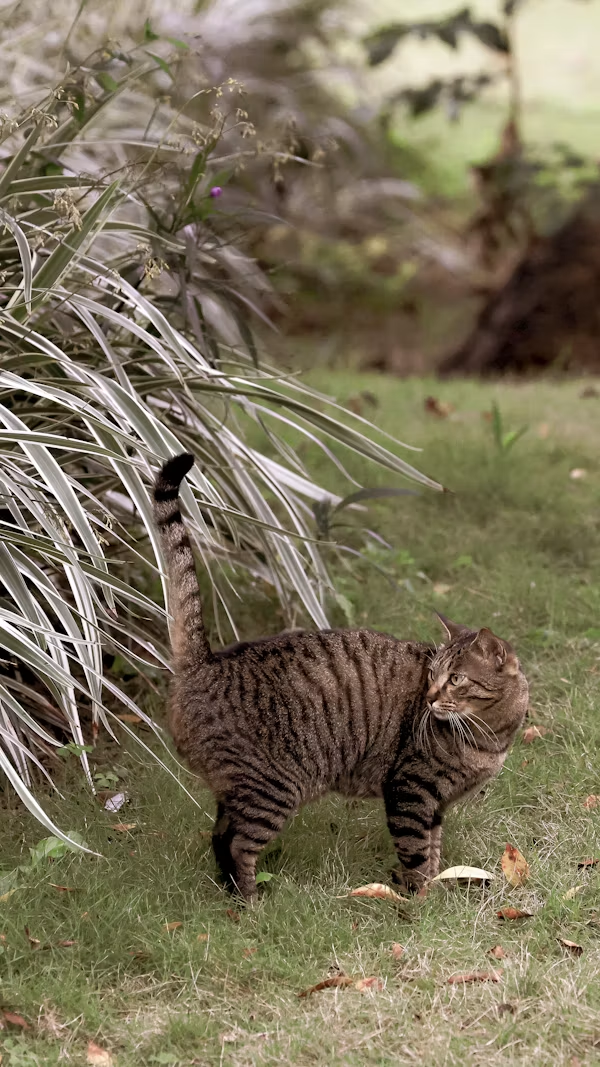
You can often tell something is going on with a cat before they make a sound.
Sometimes it is the way they walk into a room with their tail held high. Sometimes it is a quick flick at the tip while they sit quietly beside you. And sometimes their tail suddenly becomes twice its normal size, leaving you wondering what just happened.
A cat’s tail can reveal a lot about how they are feeling, but it is not a simple code where one position always means one thing.
The same tail movement can have different meanings depending on what is happening around the cat and what the rest of their body is doing.
Learning cat tail language is less about memorizing signals and more about noticing patterns.
What Is Cat Tail Language?
Cats use their tails as part of their body language. The position, movement, and shape of the tail can change as a cat becomes relaxed, curious, excited, uncomfortable, frightened, or irritated.
That does not mean every tail movement has a single guaranteed meaning.
A cat walking toward you with their tail straight up is usually giving a very different signal from a cat standing still with a puffed-up tail. Likewise, a gentle movement of the tail can mean something different from rapid, forceful swishing.
The best way to understand your cat is to look at the tail together with their ears, eyes, posture, and the situation around them.
Common Cat Tail Positions and What They Mean
Tail Held Straight Up
A tail held upright is generally a friendly and confident signal.
You may see your cat walking toward you with their tail pointing straight up, especially when they are greeting you or approaching another familiar person or animal.
A relaxed upright tail can suggest that your cat feels comfortable and social.
If the tip has a slight curve, the mood may be even more playful or curious.
Tail Curved Like a Question Mark
Sometimes a cat holds their tail upright but bends the tip forward, creating something that looks a little like a question mark.
This position is often associated with friendliness, curiosity, or an invitation to interact.
You might notice it when your cat approaches you and seems interested in what you are doing.
It is one of those tail positions that can make a cat look as though they are asking, “What are you up to?”
Tail Held Low
A lowered tail can mean that a cat is uncertain, cautious, or uncomfortable.
The context matters here.
A cat walking quietly with their tail somewhat low may simply be paying close attention to something unfamiliar. A cat keeping their tail low while also crouching, flattening their ears, or trying to move away may be showing fear or stress.
Rather than focusing on the tail alone, look at the entire posture.
Tail Tucked Close to the Body
A tail tucked tightly against the body can be a stronger sign of fear or anxiety.
Cats may do this when they feel threatened or insecure.
If your cat is also crouching, keeping their ears back, widening their eyes, or trying to hide, the combination suggests that they are not feeling comfortable with what is happening.
This is a moment when giving the cat some space can be more helpful than trying to approach them.
Puffed-Up Tail
Few cat signals are as recognizable as the suddenly enormous tail.
When the fur along the tail stands up, making it look much larger than usual, the cat is experiencing a strong emotional response. Fear, surprise, or a feeling of being threatened can all be involved.
A puffed tail does not automatically mean a cat is angry.
Sometimes a cat becomes startled by a noise, another animal, or something unexpected and reacts before they have even figured out what happened.
The rest of the body can help you understand the situation.
Tail Wrapped Around the Body
A cat sitting or resting with their tail wrapped around their body may simply be comfortable and settled.
However, if the tail is wrapped tightly while the cat is sitting in a tense posture, the meaning may be different.
This is a good example of why cat tail language cannot be read like a fixed dictionary. The same basic position can appear in different emotional situations.
Tail Wrapped Around You
If your cat wraps their tail around your leg or another part of your body, it can be part of a friendly social interaction.
Some cats do this when greeting a familiar person, almost like their own version of staying close.
It is a small gesture, but once you start noticing it, you may realize your cat has been communicating with you this way all along.
What Different Cat Tail Movements Mean
A cat’s tail does not only communicate through position. Movement matters too.
Slow Swishing or Swaying
A slow, gentle movement can happen when a cat is focused on something.
You may see the tail moving from side to side while your cat watches a bird through the window, follows something moving across the room, or concentrates on play.
Depending on the situation, slow swishing can also accompany mild irritation.
The important clue is what happens next.
Fast Swishing or Lashing
Rapid, forceful tail movements are usually worth paying attention to.
A cat that begins whipping their tail from side to side may be becoming irritated, overstimulated, or agitated.
This is especially useful to notice during petting.
If your cat was relaxed and then suddenly starts lashing their tail, it may be a sign that they have had enough interaction and would prefer a break.
Twitching at the Tip
Sometimes only the end of the tail moves.
A twitching or flicking tail tip can appear when a cat is intensely focused, excited, curious, or mildly irritated.
Again, there is no need to assume one meaning immediately.
Look at what your cat is watching and what their body is doing.
Quivering Tail
A tail that appears to vibrate or quiver while held upright can occur during excitement or strong social arousal.
You may notice this when a cat greets someone they know or becomes very excited about something.
However, context still matters, particularly if the behavior appears alongside unusual changes in urination or other behavior.
Why You Shouldn’t Read Your Cat’s Tail Alone
The tail gives you an important clue, but it does not tell the whole story.
Imagine a cat sitting with their tail moving slowly from side to side.
Are they irritated?
Maybe.
But perhaps they are watching a bird outside. Maybe they are concentrating on a toy. Or perhaps they are becoming overstimulated while being petted.
The tail is only one part of the conversation.
That is why interpreting cat body language works best when you consider several signals together rather than assigning a single emotion to one tail position. For a broader veterinary explanation of feline body language and tail signals, PetMD’s guide to cat tail language is a useful reference.
How to Read Your Cat’s Tail With the Rest of Their Body
Start with the ears.
Forward-facing ears can suggest attention or interest, while ears held flat or turned back may appear when a cat is frightened, irritated, or uncomfortable.
Then look at the eyes.
Wide eyes, narrowed eyes, staring, or slowly blinking can all appear in different situations, so the surrounding behavior matters.
Next, notice the body.
Is your cat loose and relaxed, or crouched and tense? Are they approaching you, staying still, hiding, or trying to leave?
Finally, consider what happened immediately before the tail changed.
Did you touch them somewhere they do not like? Did another animal enter the room? Did they hear a sudden noise? Are they watching something outside?
These details can turn a confusing tail movement into a much clearer picture.
For a broader veterinary explanation of feline body language and tail signals, PetMD’s guide to cat tail language is a useful reference.
When a Change in Tail Position May Be Worth Noticing
A tail position by itself is usually not enough to tell you that something is wrong.
What deserves more attention is a noticeable change in your cat’s usual behavior, especially when it continues or appears together with other changes.
For example, a cat that suddenly hides much more than usual, stops eating, seems unusually tired, has difficulty moving, changes their litter box habits, or appears to be in pain may need professional attention.
The key is knowing what is normal for your individual cat.
A naturally quiet cat and a naturally energetic cat will not communicate in exactly the same way. What matters is noticing when your own cat behaves differently from their usual pattern.
If a change is sudden, persistent, or accompanied by other concerning signs, contacting a veterinarian is the safest way to understand what is happening.
Frequently Asked Questions
What does it mean when a cat’s tail is straight up?
A cat holding their tail straight up is generally showing a friendly, confident, or social mood, particularly when approaching someone familiar.
Why does my cat wag their tail?
Cats can move their tails for several reasons. Slow movement may happen during concentration or mild irritation, while fast lashing can indicate stronger agitation or overstimulation.
What does a puffed-up cat tail mean?
A puffed-up tail usually appears during a strong emotional reaction such as fear, surprise, or feeling threatened. The rest of the cat’s body can help explain what triggered the reaction.
Why does my cat tuck their tail?
A tightly tucked tail can be associated with fear, anxiety, or insecurity. Look for other signs such as crouching, flattened ears, or attempts to hide.
Can I tell how my cat feels just by their tail?
Not reliably. The tail is an important part of feline body language, but it should be interpreted together with the ears, eyes, posture, movement, and surrounding situation.
Learning Your Cat’s Own Language
Once you start paying attention to your cat’s tail, you may notice that they have their own patterns.
One cat may give a tiny tail-tip twitch when concentrating. Another may greet you with a tail held high every morning. Another may become very expressive with their tail during play.
Those small differences are part of what makes living with cats so interesting.
Instead of trying to translate every movement into one fixed emotion, watch for changes, combine the clues, and learn what is normal for your cat.
Over time, that strange-looking tail movement may not seem so mysterious anymore.