
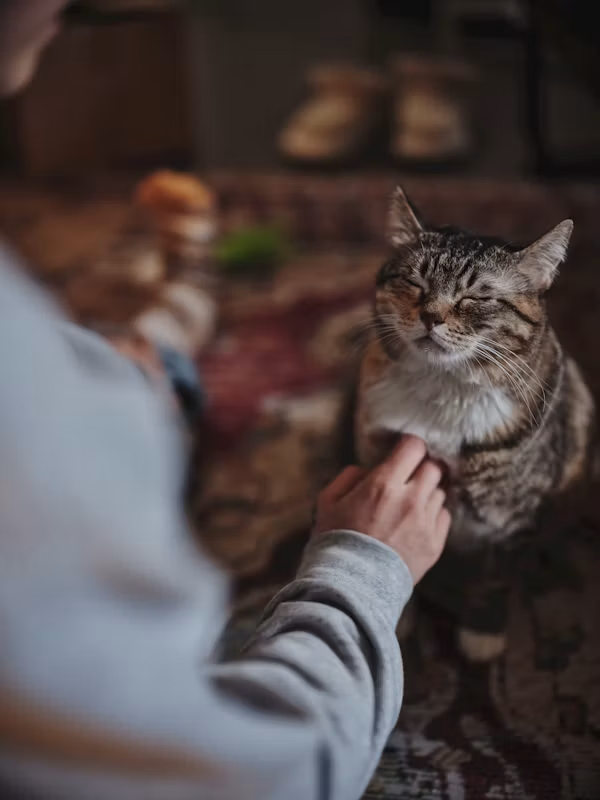
There is a particular moment when you realize your cat has stopped simply living in the same house as you and has started feeling safe with you.
Maybe they fall asleep beside you without worrying about what you are doing. Maybe they walk into the room and quietly settle nearby. Sometimes it is something even smaller: a slow blink, a relaxed stretch, or the way your cat turns their back to you and simply stays there.
Cats do not always show trust in the same obvious ways people do. Some cats are affectionate and constantly looking for attention. Others prefer to keep a little distance, even from the people they love most.
So how do you know if your cat actually trusts you?
The answer is usually found in their everyday behavior. Trust in cats is less about one dramatic gesture and more about a pattern of small choices that show your cat feels secure around you.
What Does Trust Look Like in Cats?
For a cat, trust is closely connected to feeling safe.
A trusting cat does not necessarily need to sit on your lap, follow you everywhere, or ask to be petted all day. Instead, they may simply behave naturally around you. They relax, rest, explore, eat, sleep, and interact without constantly feeling the need to stay alert. Their posture, ears, eyes, and overall body position can offer useful clues about how comfortable they feel.
This is important because cats have different personalities. One cat may show trust through physical affection, while another may show it by choosing to stay in the same room without needing constant contact.
The most meaningful signs are therefore not about how affectionate your cat is. They are about how comfortable your cat feels when you are around.
10 Signs Your Cat Trusts You
1. Your Cat Relaxes Around You
One of the clearest signs of trust is simply seeing your cat relax in your presence.
They may stretch out on the floor, curl up on the couch, groom themselves, or lie down with their body completely loose. Their ears and body are relaxed rather than constantly reacting to every movement.
A cat that feels unsafe is more likely to remain tense, hide, or keep their attention focused on possible threats.
When your cat can simply switch off around you, that quiet comfort matters.
2. Your Cat Chooses to Stay Near You
Your cat does not have to be touching you to be showing affection or trust.
If they repeatedly choose to stay in the same room as you, sit beside you while you work, or settle somewhere nearby while you watch television, they may be telling you that your presence feels safe.
Cats are independent animals, so choosing proximity can be meaningful.
Sometimes your cat’s version of “I want to be with you” is simply sitting three feet away.
3. Your Cat Sleeps Near You
Sleep leaves a cat vulnerable.
That is why where your cat chooses to sleep can tell you something about how secure they feel. If your cat regularly sleeps beside you, at your feet, on your bed, or somewhere close by, they may feel comfortable enough to relax deeply in your presence.
They do not necessarily need to sleep directly on you.
The important part is that they are willing to become vulnerable while you are nearby.
4. Your Cat Approaches You
Does your cat sometimes walk toward you without being called?
Maybe they come over when you sit down, walk into the room to see what you are doing, or approach you after being away for a while.
Voluntary approach is meaningful because your cat is making the decision to interact with you.
A cat that trusts you learns that approaching you usually leads to something safe: companionship, gentle attention, food, play, or simply a comfortable moment together.
5. Your Cat Slow-Blinks at You
The slow blink is one of the most recognizable forms of friendly cat communication.
When your cat looks at you and slowly closes their eyes before opening them again, it can be a sign that they are comfortable and relaxed.
You may even notice your cat doing it from across the room.
You can respond with a slow blink of your own and then look away naturally. There is no need to stare directly at your cat.
Sometimes trust is expressed in an interaction that lasts only a second.
6. Your Cat Rubs Against You
When your cat rubs their face or body against your legs, hands, or other parts of you, they are not simply asking for attention.
Cats use scent as part of how they communicate and recognize familiar individuals. Rubbing against you can be part of marking you with their scent while also reinforcing social familiarity.
If your cat regularly greets you this way, it can be a sign that you are a familiar and trusted part of their environment.
7. Your Cat Shows You Their Belly
A cat lying on their back and exposing their belly can look like an invitation for a belly rub.
But that is not always what it means.
A relaxed cat may expose their belly because they feel secure enough to assume a vulnerable position. It can be a sign of trust without necessarily being permission to touch that sensitive area.
Pay attention to the rest of the body.
If your cat is relaxed, loose, and comfortable, the exposed belly may simply be their way of showing that they feel safe around you.
And sometimes the best response is to admire the belly without touching it.
8. Your Cat Turns Their Back to You
This can seem strange from a human perspective.
Why would turning their back be a sign of trust?
Because your cat does not always need to keep watching you.
If your cat sits with their back toward you, lies down facing away from you, or settles comfortably without monitoring your movements, they may be showing that they do not consider you a threat.
A cat that feels secure does not need to keep you constantly in sight.
That quiet lack of vigilance can be a surprisingly meaningful sign.
9. Your Cat Allows Gentle Handling
Some cats enjoy being picked up. Others absolutely do not.
So trust should not be measured by how long your cat allows you to hold them.
Instead, consider whether your cat accepts appropriate, gentle handling when necessary. They may allow you to touch their paws, brush their coat, check their body, or move them when needed without immediately becoming frightened or defensive.
A trusting cat can still have boundaries.
Respecting those boundaries is actually part of maintaining the trust you have built.
10. Your Cat Seeks You Out When They Need Comfort
Sometimes the strongest sign of trust appears when your cat is uncertain, stressed, or simply looking for reassurance.
Your cat may come and sit near you during a loud noise, seek your presence after something unusual happens, or become more interested in you when their environment feels different.
This does not mean every cat will run into your arms when frightened.
Some cats cope with stress by hiding.
But if your cat has learned that your presence is associated with safety, they may choose you as a familiar source of comfort.
Trust Doesn’t Always Look Like Affection
This is one of the easiest things to misunderstand about cats.
A cat can trust you deeply without being a lap cat.
They may never sleep on your chest. They may not enjoy being carried. They may walk away after a few seconds of petting. They may prefer sitting beside you instead of on you.
None of those things automatically mean your cat does not trust you.
Personality matters.
Some cats communicate affection through physical contact. Others show it through proximity, routine, eye contact, relaxed body language, or simply choosing to remain close.
Instead of asking, “Does my cat act affectionate enough?” it can be more useful to ask, “Does my cat feel safe enough to be themselves around me?”
That is often where trust becomes visible.
Signs Your Cat May Still Feel Unsure Around You
Trust develops gradually, and not every cat reaches the same level of comfort at the same speed.
Your cat may still feel unsure around you if they frequently hide when you enter a room, remain tense when you approach, flatten their ears, keep their body low, retreat whenever you try to touch them, or react strongly to sudden movements.
Avoiding eye contact alone does not necessarily mean your cat is afraid of you. Cats communicate in subtle ways, so it is better to look for patterns rather than interpreting one behavior by itself.
If your cat seems uncomfortable, giving them more space can be more helpful than trying harder to make them affectionate.
Trust grows when a cat learns that their boundaries will be respected.
How to Strengthen Your Cat’s Trust
If your cat already shows several signs of trust, the best thing you can do is continue giving them reasons to feel safe.
Keep routines predictable when possible. Approach calmly. Let your cat decide when they want physical contact, and avoid forcing interaction when they walk away.
You can also build positive associations through play, gentle attention, food, and quiet time together.
And if you are still working on building a relationship with a cat who seems unsure of you, patience matters more than trying to make them like you quickly.
For practical ways to encourage that relationship, see our guide on How to Get a Cat to Like You.
The goal is not to make your cat behave a certain way.
It is to create an environment where your cat feels safe enough to choose closeness on their own.
Frequently Asked Questions
How can I tell if my cat trusts me?
Look for a pattern of relaxed behavior around you. Sleeping nearby, approaching you voluntarily, slow blinking, rubbing against you, and choosing to remain close can all be signs that your cat feels secure with you.
Does my cat trust me if they don’t sit on my lap?
Yes. Cats have different personalities and preferences. A cat can trust you deeply while preferring to sit beside you rather than on you.
Does a cat sleeping next to you mean they trust you?
It can be a positive sign. Sleeping makes a cat vulnerable, so choosing to rest near you may indicate that your cat feels safe and comfortable in your presence.
Why does my cat turn their back to me?
A relaxed cat turning their back may indicate that they feel comfortable enough not to monitor you constantly. Look at their overall body language to understand the situation.
Does showing their belly mean my cat trusts me?
An exposed belly can be a sign that your cat feels safe enough to adopt a vulnerable position. However, it does not necessarily mean they want their belly touched.
Can a cat trust me but still be shy?
Absolutely. Trust and confidence are not the same thing. A shy cat may trust you while still preferring quiet spaces, distance, and limited physical interaction.
How long does it take for a cat to trust you?
There is no fixed timeline. Some cats become comfortable quickly, while others need weeks or months. Their previous experiences, personality, age, and environment can all influence how quickly trust develops.
What is the biggest sign that a cat trusts you?
There may not be one single behavior that proves it. A consistent pattern of relaxation, voluntary proximity, comfortable interaction, and willingness to be vulnerable around you is more meaningful than any one gesture.