
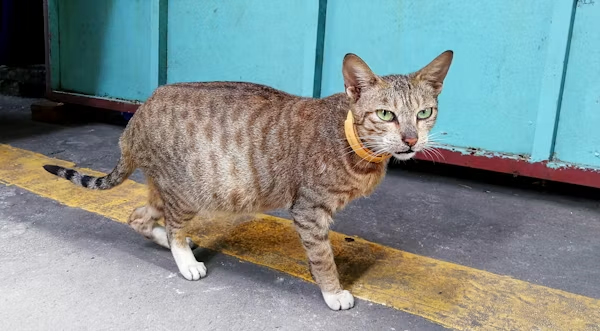
Seeing a three-legged cat for the first time can make you stop and wonder how it manages everyday life. Can a cat really run with only three legs? Can it still jump, climb, play, and live comfortably?
The answer may surprise you.
A three-legged cat, sometimes called a tripod cat or tripawd, can often adapt remarkably well to life with one missing limb. While some cats need time, patience, and a few changes around the home, losing a leg does not necessarily prevent a cat from enjoying an active and happy life.
If you are considering adopting a three-legged cat, caring for one after an amputation, or simply curious about how these cats manage, here is what you should know.
What Is a Three-Legged Cat?
A three-legged cat is a cat that has lost one of its limbs, either because of an injury, illness, a congenital condition, or an amputation performed to protect its health.
The missing limb can be a front or back leg, and the way a cat moves afterward can vary depending on which leg is missing.
You may also hear these cats called tripod cats or tripawds. The name comes from the idea that the cat now moves with three supporting limbs instead of four.
Although the change may look dramatic to humans, cats can be surprisingly good at adapting their movement and balance.
Can a Three-Legged Cat Live a Normal Life?
Yes. Many three-legged cats can live happy, active lives.
After the initial adjustment period, a tripod cat may still be able to walk, run, jump, climb, play with toys, and explore its surroundings. Some may move differently or become tired more quickly, but that does not automatically mean they have a poor quality of life.
Cats Protection notes that many three-legged cats adapt remarkably well and can continue to jump, run, climb, and play once they have adjusted.
The most important thing is not whether the cat moves exactly like a four-legged cat. It is whether the cat is comfortable, mobile, eating normally, interacting with its surroundings, and enjoying its daily life.
How Do Cats Adapt to Having Three Legs?
Cats are naturally good at adjusting their movements.
When one leg is missing, the remaining limbs have to take on a different role. The cat gradually learns how to distribute its weight, balance its body, and move in a way that feels comfortable.
The adjustment can take time, especially immediately after surgery.
During this period, a cat may appear cautious or uncertain. It may walk slowly, avoid jumping, or spend more time resting.
This does not necessarily mean the cat will always have difficulty moving.
As strength and confidence return, many cats become much more independent.
Some even seem to stop noticing their missing limb altogether.
What Does a Three-Legged Cat Need at Home?
A tripod cat does not necessarily need a completely different home. However, a few thoughtful changes can make everyday life safer and easier.
Make Important Things Easy to Reach
Food, water, the litter box, a comfortable sleeping area, and favorite resting places should be easy for your cat to access.
This is particularly important immediately after an amputation or during the adjustment period.
Keeping essential items nearby can reduce unnecessary jumping and climbing while the cat is still regaining strength.
Reduce Slippery Surfaces
Hard, slippery floors can make movement more difficult for a three-legged cat.
Rugs, runners, or other surfaces that provide traction can help your cat feel more secure while walking and turning.
This can be especially useful in areas where the cat frequently moves between rooms.
Provide Steps or Ramps
Your cat may still be able to jump, but some heights can become more difficult depending on which leg is missing.
A small step, ramp, or strategically placed piece of furniture can help your cat reach a favorite sofa, bed, or windowsill without having to make a difficult jump.
The goal is not to prevent your cat from being active. It is to give the cat safe alternatives when necessary.
Do Three-Legged Cats Need Special Exercise?
Three-legged cats can and should remain active when their veterinarian says exercise is appropriate.
Movement helps maintain muscle strength, which is important because the remaining limbs may have to handle more of the body’s weight.
Gentle play can be a good way to encourage movement without forcing the cat to do more than it can comfortably manage.
You might notice that your cat gets tired sooner than it did before losing its leg. If that happens, allow plenty of opportunities for rest.
The goal is regular, comfortable activity, not intense exercise.
After surgery, always follow the veterinarian’s instructions about when and how activity should resume.
Why Is Keeping a Tripod Cat at a Healthy Weight So Important?
Weight management is particularly important for a three-legged cat.
Every extra amount of weight has to be supported by the remaining limbs. Keeping a tripod cat at a healthy weight can therefore help reduce unnecessary strain on its joints and muscles.
Veterinary sources also point out that three-legged animals may face increased stress on their remaining limbs and joints as they age.
This does not mean you should put your cat on a diet without professional guidance.
Instead, focus on appropriate portions, balanced nutrition, regular activity, and routine veterinary checkups.
If you are unsure whether your cat is at a healthy weight, your veterinarian can assess its body condition and recommend an appropriate feeding plan.
Can a Three-Legged Cat Still Jump?
Yes, many can.
A three-legged cat may still jump onto furniture, climb, and reach favorite places around the house. However, the ability to jump can depend on which leg is missing, the cat’s age, muscle strength, confidence, and overall health.
A cat missing a front leg may face different challenges from a cat missing a back leg.
Rather than assuming that your cat cannot jump, observe what it can comfortably do.
You can also make favorite elevated areas easier to reach by adding steps, ramps, or lower resting spots.
Can a Three-Legged Cat Still Play?
Absolutely.
Playing is not only possible for many tripod cats; it can also be an important part of keeping them active and mentally stimulated.
Interactive toys, gentle chasing games, food puzzles, and toys that encourage controlled movement can all provide opportunities for activity.
Just pay attention to your cat’s signals.
If your cat becomes tired, uncomfortable, hesitant, or stops participating, give it a break.
A tripod cat does not need to prove that it can do everything a four-legged cat can do. The goal is simply to help it enjoy movement at its own pace.
What About the Litter Box?
The litter box may require some attention, particularly after surgery.
A cat that is still recovering may find it difficult to step over a high edge or maintain balance while entering and leaving the box.
A litter box with a lower entrance can make things easier during the recovery period.
Place it somewhere quiet and easy to reach so the cat does not have to climb stairs or travel a long distance.
As the cat becomes stronger and more confident, its needs may change.
Do Three-Legged Cats Need More Veterinary Care?
A three-legged cat does not automatically require constant veterinary treatment simply because it has three legs.
However, regular veterinary care remains important.
The remaining limbs and joints may experience different levels of stress because the cat’s weight and movement have changed. Over time, this can contribute to joint problems in some cats.
Routine checkups allow your veterinarian to monitor weight, mobility, muscle condition, and overall health.
You should also contact a veterinarian if you notice sudden changes such as difficulty walking, dragging a remaining limb, refusing to move, obvious pain, or a significant change in behavior.
For a cat with only three legs, protecting the health of the remaining limbs is particularly important.
Can a Three-Legged Cat Go Outside?
This depends on the individual cat and its environment.
A three-legged cat may be able to move surprisingly well outdoors, but outdoor environments also contain risks that can be harder for a tripod cat to manage.
Uneven ground, traffic, aggressive animals, fences, and the need to escape quickly can all present challenges.
For this reason, many owners choose to keep their three-legged cats indoors or provide controlled outdoor access.
If you want your cat to experience the outdoors, discuss the safest approach with your veterinarian.
What Should You Expect After a Leg Amputation?
The period immediately after surgery can be the most challenging.
Your cat may be tired, uncomfortable, cautious, or confused about how to move. It may need a quiet, controlled space while the surgical site heals.
Follow the veterinarian’s instructions carefully regarding medication, activity, wound care, and follow-up appointments.
Do not assume that because a cat seems eager to move, it is ready for unrestricted activity.
Once healing progresses, the cat can gradually begin rebuilding strength and confidence.
The adjustment is not only physical. Your cat may also need time to become comfortable with its new way of moving.
Do Three-Legged Cats Know They Are Different?
It is tempting to think about a tripod cat from a human perspective and imagine what it would feel like to lose a limb.
But cats do not necessarily think about their bodies in the same way humans do.
Once a cat adapts to its new movement pattern, it may simply get on with its daily life.
That is one of the most remarkable things about three-legged cats.
They are not constantly thinking about what they used to have. They are responding to the environment around them and learning what their bodies can do now.
Frequently Asked Questions About Three-Legged Cats
How long can a three-legged cat live?
A three-legged cat does not automatically have a shorter lifespan simply because it has three legs. Overall health, age, genetics, nutrition, weight, and veterinary care are much more important factors.
Can a three-legged cat run?
Yes. Many tripod cats can run once they have fully adapted and healed. Their running style may look different, but they can still enjoy short bursts of activity.
Can a three-legged cat climb?
Many can. Some tripod cats continue climbing furniture, cat trees, and other elevated surfaces. The level of difficulty depends on the missing limb and the individual cat.
Is a three-legged cat considered a special-needs cat?
Not necessarily. A tripod cat may need some adjustments, particularly during recovery, but many eventually function very well in everyday life.
Should I adopt a three-legged cat?
If you are considering adoption, a three-legged cat can be a wonderful companion. The important thing is to understand its individual needs and make sure you are prepared to provide a safe environment, appropriate nutrition, veterinary care, and patience during the adjustment period.
Final Thoughts
A three-legged cat may look fragile at first, but appearances can be misleading.
Cats are remarkably adaptable animals, and many learn to move, play, climb, and enjoy everyday life with only three legs.
The best support you can provide is not to treat your cat as incapable. Instead, give it time to adapt, keep its weight under control, make the home safe and accessible, encourage comfortable activity, and pay attention to changes in mobility or behavior.
With the right support, a tripod cat can be much more than a cat that lost a leg.
It can simply be a cat living its life.