
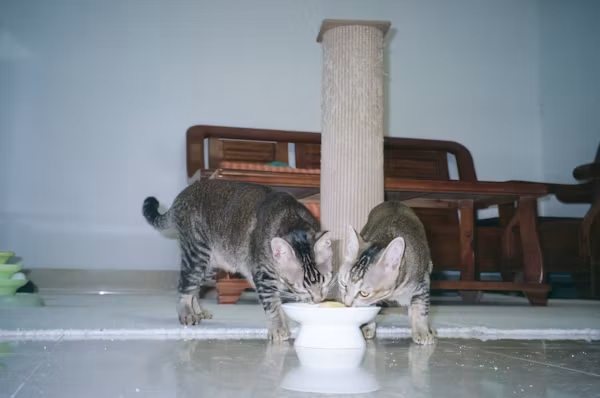
You have finally decided that you are ready for a kitten.
Then you meet two.
They are playing together, chasing each other around, stopping for a quick nap, and then suddenly getting back up as if they have endless energy. You may start wondering whether taking both home would actually be better than choosing just one.
It is a common question, especially when two kittens are siblings or already seem attached to each other.
So, is it better to have two kittens?
In many situations, two kittens can be a wonderful choice. They can play together, learn from each other, and have company during those long stretches when their human family is busy. But that does not mean that every kitten must have a feline companion or that one kitten cannot be happy.
The right choice depends on the kittens, your home, your time, your resources, and how prepared you are to meet their needs.
Is It Better to Have Two Kittens?
For many families, raising two kittens together can make life easier in some ways.
Kittens have a huge amount of energy. They want to explore, chase, pounce, wrestle, climb, and play. When two compatible kittens grow up together, they can provide some of that stimulation for each other.
They may chase one another across the room, wrestle for a few minutes, groom each other, or curl up together when they finally become tired.
This does not mean that two kittens are automatically better than one.
Some kittens are perfectly capable of growing into happy, well-adjusted cats while living alone, particularly when they receive plenty of interaction, play, socialization, and enrichment from their human family.
The question is not simply whether two kittens are better.
It is whether two kittens are the better choice for your particular situation.
Why Two Kittens May Be Better Than One
One of the biggest advantages of adopting two kittens is that they can give each other opportunities for play and social interaction.
A human can play with a kitten using toys, but we cannot completely replace another kitten running across the room, wrestling, chasing, and responding to the same playful energy.
Two kittens can also help prevent one kitten from relying on their human for every moment of entertainment.
That can be especially helpful for people who work outside the home or who cannot spend hours playing with a kitten throughout the day.
When two kittens are compatible, you may also see them develop their own relationship.
They may:
- play together
- chase each other
- groom one another
- sleep close together
- explore their surroundings together
- learn appropriate play boundaries
- provide companionship when their humans are busy
These interactions are not guaranteed, of course. Cats have individual personalities, and two kittens may not become inseparable.
But kittens that already know each other, particularly littermates, may have an easier starting point because they are already familiar with one another.
What Are the Benefits of Raising Two Kittens Together?
There is something special about watching two kittens grow up together.
They are not simply sharing a home. They are experiencing many of their first moments side by side.
One kitten may discover a new toy and immediately invite the other to play. One may become curious about a strange sound while the other watches. They may learn which games are fun and when another kitten has had enough.
This kind of interaction can provide both physical activity and social stimulation.
They can play together
Kittens need a lot of play.
Two kittens can chase, pounce, wrestle, and run together, which gives them a natural way to use some of their energy.
This does not replace human interaction. You still need to play with them and provide toys and enrichment.
But having another kitten can add a type of play that humans cannot completely reproduce.
They can provide companionship
A kitten that has another compatible kitten nearby may have someone to interact with when the humans in the household are busy.
They can rest together, explore together, or simply stay in the same room.
Some pairs become very close and appear to seek each other out for comfort and companionship.
They can learn from each other
Young cats learn through interaction.
Playing with another kitten can give them opportunities to practice chasing, pouncing, retreating, and responding when play becomes too rough.
This is one reason the idea of raising kittens together is often appealing.
However, it is important not to turn this into a guarantee that a single kitten will develop behavioral problems. There is no scientific evidence establishing “single kitten syndrome” as a formal condition. The concept is better understood as a concern about socialization, enrichment, and the individual needs of a kitten raised alone.
What Is Single Kitten Syndrome?
You may have heard the expression single kitten syndrome while researching kitten adoption.
The term is used to describe the idea that a kitten raised without another kitten may be more likely to develop certain unwanted behaviors, such as rough play, excessive attention-seeking, or difficulty learning social boundaries.
But there is an important distinction here.
Single kitten syndrome is not a scientifically established disease or diagnosis.
Some veterinary and cat-care sources describe the idea as a theory or an anecdotal concept rather than something supported by strong scientific evidence.
That does not mean socialization is unimportant.
Kittens still need opportunities to play, explore, interact, and learn. If you raise one kitten, you may simply need to be more intentional about providing those experiences.
So, hearing about single kitten syndrome should not make you feel that adopting one kitten is automatically a bad decision.
Can a Kitten Be Happy Living Alone?
Yes.
A kitten does not automatically become unhappy or poorly behaved simply because they are the only cat in the home.
Individual temperament matters.
Some cats are very social and seem to enjoy feline company. Others are more independent and may be perfectly content being the only cat, as long as their physical, social, and emotional needs are being met.
A single kitten may need more involvement from their human family, especially when they are young.
That can include:
- interactive play
- toys that encourage natural behaviors
- opportunities to explore
- scratching surfaces
- safe places to climb
- regular human interaction
- appropriate socialization
The goal is not to recreate another kitten.
The goal is to make sure the kitten has enough stimulation and positive interaction to develop normally.
Are Two Kittens More Difficult to Care For?
Two kittens can be more work.
There is no reason to pretend otherwise.
You will have two animals to feed, two sets of veterinary needs, more litter to manage, and potentially more expenses.
You also need to make sure that both kittens have enough resources and individual attention.
But there is an interesting balance.
Two kittens may create more responsibility while also reducing some of the work involved in entertaining a very energetic kitten.
Instead of one kitten looking to you every few minutes for another game of chase, the two may spend some of that energy playing together.
That does not mean caring for two kittens is half as much work as caring for one.
It simply means that some parts of kitten care can become easier when they have a compatible companion.
Are Two Kittens More Expensive?
Yes, in general, two kittens cost more than one.
You will need to consider food, veterinary care, vaccinations, parasite prevention, litter, litter boxes, toys, and other supplies.
Some costs may be shared, but others will naturally increase with another animal.
Veterinary care is particularly important when making this decision because kittens need appropriate preventive care and both animals will have their own health needs.
Before choosing two kittens, it is worth looking beyond the adoption fee and asking yourself:
Can I comfortably care for both cats for many years?
That is a much more useful question than simply asking whether you can afford two kittens today.
Should You Get Two Kittens From the Same Litter?
If you are already considering two kittens, adopting littermates can be a particularly appealing option.
They have already grown up together and are familiar with each other.
That can make the transition easier than bringing two completely unfamiliar kittens together, although every pair is different.
You may also notice that littermates already have a relationship. They may sleep together, play together, or seek each other out.
But you do not have to adopt siblings for two kittens to become good companions.
Personality, energy level, social behavior, and the way the kittens interact can all matter.
If you have the opportunity to observe them before adoption, pay attention to how they behave around one another.
Are they comfortable together?
Do they play without constantly overwhelming each other?
Do they rest peacefully in the same space?
These observations can tell you more than simply knowing whether they are male or female.
What If You Already Have One Kitten?
If you already adopted one kitten, you do not need to panic because you did not adopt two.
Your kitten can still grow into a happy, healthy cat.
Instead, focus on providing what that kitten needs.
Give them daily interactive play, opportunities to explore, appropriate toys, scratching areas, safe resting places, and positive social experiences.
If you later decide to bring another cat into the home, take the introduction seriously.
Do not assume that putting two cats together immediately will guarantee friendship.
Cats are territorial animals, and introductions may need to happen gradually.
The same principle applies when you are considering two kittens from the beginning: compatibility and the environment matter.
How to Help Two Kittens Get Along
If you bring two kittens home together, give them a comfortable environment where both can eat, sleep, play, and retreat when they need space.
Having enough resources matters even when two kittens seem inseparable.
Provide separate food and water areas when appropriate, multiple resting places, scratching surfaces, toys, and enough litter boxes for the household.
Most importantly, watch how they interact.
A little wrestling and chasing can be completely normal kitten play.
But if one kitten is constantly trying to escape, hiding, becoming fearful, or being prevented from accessing food, water, litter, or resting places, the situation needs attention.
Two kittens do not have to do everything together.
A healthy relationship also includes being able to move away from each other and have their own space.
So, Is It Better to Have Two Kittens?
For some families, yes.
Two kittens can have a wonderful relationship. They may play together, keep each other company, and experience many of the early stages of life side by side.
For other families, one kitten may be the better choice.
The important thing is not to follow a rule that says every kitten must have a companion.
Instead, look at the whole picture.
Consider the kitten’s personality, your schedule, your home, your budget, and how much time you can devote to play and socialization.
If two kittens are compatible and you are prepared to care for both of them, bringing them home together can be a beautiful experience.
And if you choose one kitten, that does not mean you have made a bad decision.
A single kitten can also thrive with attention, enrichment, play, and a caring home.
Sometimes the best choice is not the one that sounds perfect on paper.
It is the one that allows the kitten — or kittens — in front of you to grow up feeling safe, stimulated, and loved.