
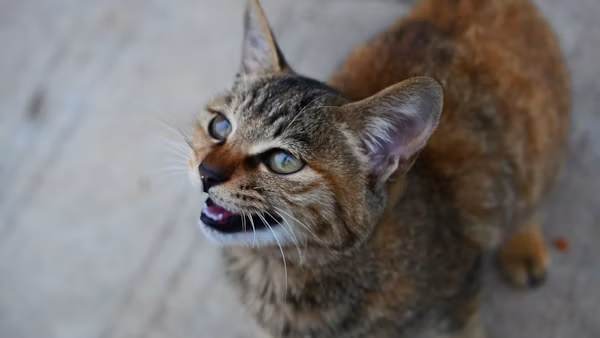
A cat that suddenly hisses, swats, bites, or attacks can be difficult to understand.
One moment, your cat may be resting quietly on the couch. The next, their ears are back, their tail is moving sharply, and they seem completely different.
It is natural to wonder what happened.
Is your cat angry? Afraid? In pain? Playing? Trying to protect their territory?
Cat aggression can have many different causes, and the behavior does not always mean that a cat is simply “mean” or difficult. Cats often react aggressively because they feel threatened, overstimulated, frightened, frustrated, or uncomfortable.
Sometimes, the reason is much less obvious.
Understanding what happened before the aggressive behavior can help you understand what your cat may be trying to communicate.
What Does Aggression Look Like in Cats?
Aggression is not always a dramatic attack.
A cat may show smaller warning signs before actually biting or scratching. Learning to notice these signs can give you a chance to stop the situation before it escalates.
Some common signs include:
- flattened or backward-facing ears
- dilated pupils
- a rapidly moving or twitching tail
- raised fur
- hissing or growling
- showing the teeth
- crouching or making the body appear larger
- staring intensely
- swatting
- chasing
- biting or scratching
The exact combination depends on the cat and the situation.
A frightened cat may crouch low, flatten their ears, and try to create distance. A more offensive posture may involve an arched back, raised fur, direct staring, and moving toward another animal or person.
The important thing is to look at the whole body, rather than focusing on one signal.
Why Do Cats Become Aggressive?
Cats can become aggressive for many reasons.
Fear is one of the most common. A cat that believes they cannot escape a frightening person, animal, sound, or situation may try to make the perceived threat go away.
Pain is another important possibility.
A normally gentle cat may bite or scratch when someone touches an area that hurts. Dental problems, injuries, arthritis, infections, and other medical conditions can contribute to aggressive behavior.
Other cats become aggressive because they are protecting their territory, reacting to another cat, becoming overstimulated during petting, or redirecting their excitement toward whoever happens to be nearby.
This is why the question is not simply:
“Why is my cat aggressive?”
A better question is:
“What was happening when the aggression started?”
Looking at the moments before the incident can reveal patterns that are easy to miss.
Common Types of Cat Aggression
Not all aggression means the same thing.
Understanding the context can help you figure out what your cat may be reacting to.
Play Aggression
Play aggression is particularly common in young cats.
A kitten may stalk your feet, jump out from behind furniture, grab your hands, or chase another cat around the house.
The behavior can look aggressive even when the cat is playing.
Cats normally learn important play boundaries through interaction with other kittens. When play becomes too rough, the other kitten may stop playing or respond, giving the first kitten feedback.
This is one reason appropriate play and socialization are so important during kittenhood.
If your cat attacks your hands or feet during play, redirect the behavior toward a suitable toy rather than encouraging the cat to treat your body as a toy.
Fear Aggression
Fear can make even a gentle cat appear aggressive.
A frightened cat may hiss, growl, swat, bite, or scratch because they believe they need to defend themselves.
The trigger could be a stranger, another animal, a loud noise, a trip to the veterinarian, or an experience the cat associates with something unpleasant.
If a cat is afraid, trying to force contact can make things worse.
Giving the cat space and allowing them to calm down is often much safer than trying to hold or comfort them while they are showing defensive behavior.
Territorial Aggression
Cats naturally care about their territory.
A new cat entering the home can therefore create tension, especially if the resident cat feels that their space, food, resting areas, or familiar routines are being threatened.
Territorial aggression may involve staring, hissing, swatting, chasing, or fighting.
This is one reason cat introductions should not be rushed.
Petting-Induced Aggression
Some cats enjoy being petted — until they suddenly don’t.
You may be sitting with your cat, gently stroking them, when they turn their head, twitch their tail, swat, or bite.
This does not necessarily mean your cat stopped liking you.
The cat may have become overstimulated or simply reached the point where they no longer want physical contact.
Learning to recognize the early warning signs can help prevent the bite.
If your cat’s tail starts twitching, their ears move backward, or they become restless, it may be time to stop petting.
Redirected Aggression
This type of aggression can be particularly confusing.
Imagine your cat sees another cat outside the window.
They become extremely excited or agitated but cannot reach the animal. Later, you walk past and your cat suddenly swats or bites you.
It may look completely unprovoked.
But the trigger happened earlier.
The cat’s arousal was redirected toward the person or animal who happened to be nearby.
This is one reason you should be careful about approaching a highly agitated cat, even if you were not involved in whatever caused the excitement.
Pain-Induced Aggression
Pain can change behavior.
A cat that normally enjoys being handled may suddenly resist being touched, hiss, scratch, or bite when someone approaches a painful area.
This can happen with injuries, dental problems, arthritis, infections, or other health conditions.
If aggression appears suddenly in a cat that has not behaved this way before, pain or another medical problem should be considered.
How Can You Tell If a Cat Is About to Attack?
Cats often give warning signals before an attack.
The challenge is that humans do not always notice them.
Watch for changes such as:
Ears: moving backward or flattening against the head.
Eyes: pupils becoming noticeably larger.
Tail: twitching, swishing rapidly, or becoming puffed.
Body: crouching, stiffening, arching the back, or turning sideways.
Voice: hissing, growling, or other warning sounds.
Movement: stalking, freezing, swatting, or suddenly turning toward someone.
These signals do not always mean an attack will definitely happen.
But they tell you that your cat is uncomfortable, frightened, excited, or overstimulated.
That is usually the moment to give them space.
Why Is My Cat Biting or Scratching?
Biting and scratching can happen for very different reasons.
A kitten may bite because they are playing.
An adult cat may bite because they have had enough petting.
A frightened cat may bite because they feel trapped.
A cat in pain may bite because someone touched a sensitive area.
Another cat may bite during a territorial dispute.
So the bite itself does not tell you the whole story.
Instead of looking only at what the cat did, look at what happened immediately before it.
Was someone petting the cat?
Was another animal nearby?
Had the cat just seen something outside?
Was the cat hiding?
Was someone trying to pick the cat up?
Was the cat eating?
Had anything changed in the home?
These details can help reveal the reason behind the behavior.
Why Is My Cat Suddenly Aggressive?
Sudden aggression deserves special attention.
If your cat has always been gentle and suddenly begins biting, scratching, or reacting aggressively, do not assume that your cat has simply developed a bad attitude.
Pain is one possible reason.
Cats can hide signs of illness, and behavioral changes may sometimes be easier to notice than obvious physical symptoms.
Dental pain, arthritis, injuries, infections, neurological problems, and other medical conditions can contribute to aggressive behavior.
Changes at home can also matter.
Moving furniture, introducing another animal, having unfamiliar people visit, changing routines, or exposing a cat to a stressful situation can affect behavior.
If the change is sudden or unusually intense, a veterinary examination is a sensible first step.
What Should You Do When a Cat Becomes Aggressive?
The first thing to remember is do not try to win the confrontation.
If your cat is already highly agitated, give them space.
Avoid reaching toward them, picking them up, cornering them, or trying to physically restrain them unless there is an immediate emergency.
If possible, remove the trigger rather than forcing the cat to face it.
For example, if another animal outside the window is causing intense agitation, closing the blinds may help remove the visual trigger.
If two cats are fighting, separate them safely using a barrier rather than putting your hands between them.
Once the cat has calmed down, you can think about what caused the episode and how to prevent it from happening again.
How Can You Reduce Aggression in Cats?
Reducing aggression usually begins with understanding the trigger.
If the problem happens during play, increase appropriate interactive play and use toys rather than hands.
If the problem happens during petting, pay attention to your cat’s early warning signals and stop before the cat becomes overwhelmed.
If another cat is causing territorial tension, the cats may need to be separated and introduced again gradually.
If boredom or under-stimulation seems to be contributing to the behavior, enrichment can help.
This may include:
- interactive toys
- scratching posts
- climbing areas
- safe places to hide
- window perches
- regular play sessions
- opportunities to explore
The goal is not simply to stop the aggressive behavior.
It is to make the environment easier for the cat to handle.
What Should You Never Do With an Aggressive Cat?
One of the most important things is do not punish aggression with physical punishment.
Hitting, grabbing, chasing, or frightening a cat can increase fear and anxiety and may make aggressive behavior worse.
Do not deliberately provoke a cat to “teach them a lesson.”
And if two cats are fighting, do not put your hands between them.
Even a normally affectionate cat can bite when highly aroused or frightened, and redirected aggression can happen when a cat is already agitated.
Instead, create distance and use a safe physical barrier when necessary.
When Should an Aggressive Cat See a Veterinarian?
Aggression should not always be treated as a behavioral problem first.
A veterinary examination is especially important when:
- aggression appears suddenly
- your cat reacts aggressively when touched
- your cat seems painful or uncomfortable
- there are other changes in eating, drinking, movement, or behavior
- the aggression is severe
- your cat is injuring people or other animals
- you cannot identify what is triggering the behavior
A veterinarian can help determine whether an underlying medical problem could be contributing to the behavior.
If medical causes are ruled out but the aggression continues, a qualified feline behavior professional may also be helpful.
What If Two Cats Keep Fighting?
Two cats do not have to become best friends.
Sometimes their personalities simply do not match well.
If cats are repeatedly fighting, separating them and hoping they will “work it out” is not a good strategy.
They may need time apart and a gradual reintroduction.
This can involve separate spaces, allowing the cats to become familiar with each other’s scent, and eventually allowing controlled visual contact before direct interaction.
The process may take time.
Some cats adjust in days. Others need weeks or longer.
The important thing is not to rush the process just because you want the cats to get along immediately.
A peaceful home is more important than forcing a friendship.
Understanding Cat Aggression Can Help You Help Your Cat
Aggression can be frightening, especially when it seems to happen without warning.
But a cat that bites, scratches, hisses, or attacks is not necessarily an angry or bad cat.
There is usually something happening behind the behavior.
Sometimes the cat is frightened.
Sometimes they are protecting their territory.
Sometimes they have become overstimulated.
Sometimes they are playing.
And sometimes they are hurting.
That is why understanding the situation matters more than simply trying to stop the behavior.
Pay attention to what happens before the aggression. Learn your cat’s body language. Give them space when they need it, avoid punishment, and take sudden behavioral changes seriously.
The more clearly you understand what your cat is trying to communicate, the easier it becomes to respond in a way that keeps both of you safer.
And sometimes, what looks like aggression at first is simply a cat saying, in the only way they know how:
“Something is wrong. Please give me some space.”