
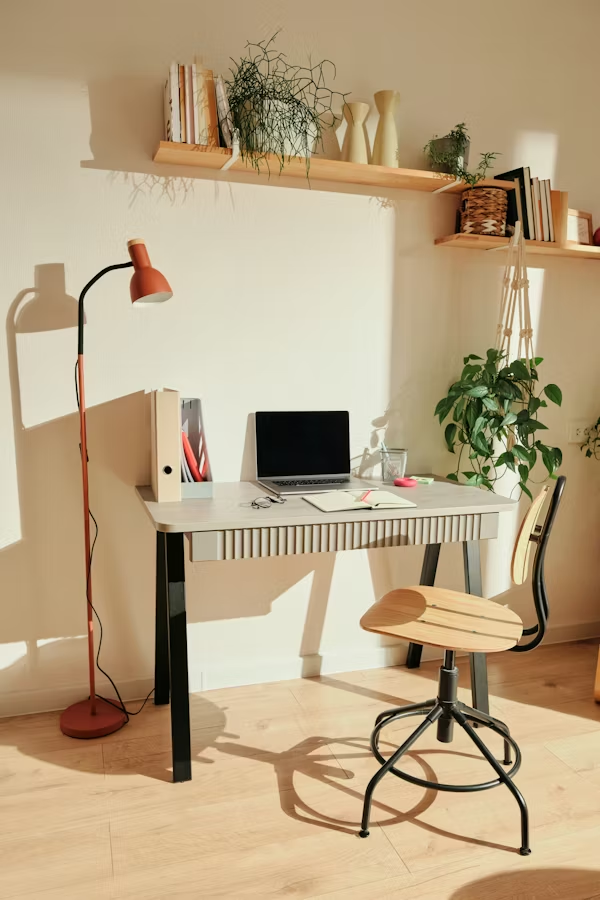
Most people believe that building better habits is about motivation.
They think they just need more discipline, more focus, or more willpower.
But if that were true… why is it so hard to stay consistent?
The truth is, your environment has a much stronger influence on your habits than motivation ever will.
You Don’t Rise to Your Motivation — You Fall to Your Environment
Think about this:
- If your phone is next to you, you’ll probably check it
- If unhealthy food is visible, you’ll likely eat it
- If your space is disorganized, your mind often feels the same
These decisions don’t require effort. They happen automatically.
Your brain is constantly responding to what’s around you — often without you even noticing.
Why Motivation Alone Doesn’t Work
Motivation is unstable.
Some days you feel focused. Other days, you don’t.
And that’s completely normal.
The problem is relying on motivation as your main strategy.
There is even a gap between what people want and what they actually do — meaning intention alone rarely leads to action .
Your Environment Is Always “Talking” to You
Your surroundings send signals all the time.
A visible book invites reading.
A phone on your bed invites scrolling.
A quiet space invites focus.
Small details create powerful patterns.
That’s why changing your environment can be more effective than trying to change yourself.
How to Make Your Environment Work for You
You don’t need to redesign your entire life.
Small changes already create a big impact.
- Leave a water bottle visible → you drink more water
- Put your phone away → you reduce distraction
- Prepare your space the night before → your morning becomes easier
If you want to improve your mornings, you can explore these healthy morning habits:
👉 https://vidaepalavras.com/10-healthy-morning-habits-for-a-better-day/
Reduce Friction for Good Habits
Good habits should be easy.
Bad habits should be harder.
That’s the key.
Instead of fighting yourself, you adjust your environment so the right choice becomes natural.
Build a Life That Supports You
You don’t need more discipline.
You need a better setup.
Your environment is not just a place — it’s a system that shapes your behavior every day.
If you’re trying to reset your routine, this step-by-step plan can help:
👉 https://vidaepalavras.com/how-to-reset-your-life-in-7-days-simple-and-realistic-plan/
Final Thoughts
You are not lazy. You are responding to your environment.
When you change what’s around you, your actions begin to change naturally.
And over time, those small changes become your new habits.

Hi, I’m Regina.
I’m a curious person who likes to notice things.
Sometimes it’s a thought that stays in my head all day. Sometimes it’s something I discover, a question I suddenly want to answer, a dream I cannot stop thinking about, or something completely ordinary that somehow becomes interesting.
I created Vida e Palavras as a place to explore all of that through words.
Here, I write about everyday life, emotions, habits, dreams, curiosity, inspiration, and the small things that make us stop and think.
I’m not here to pretend I have all the answers. I’m here to explore, discover, and share ideas along the way.
I hope you find something here that makes you think, feel, learn, or simply pause for a moment.