
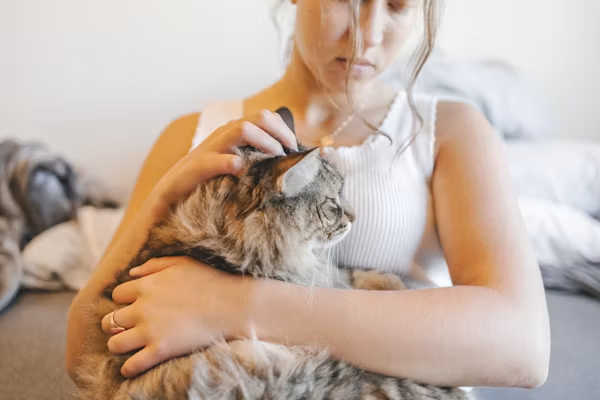
Have you ever sat down with your cat and noticed that familiar little sound begin almost immediately?
Your cat settles beside you, closes their eyes, and starts to purr while you gently stroke their head. Maybe they stretch out on the sofa, curl up on your lap, or simply lean against your leg.
It is one of those small moments that makes living with a cat feel special.
But then a question may come to mind: Why does my cat purr?
Most people immediately associate purring with happiness. And in many situations, that is exactly what it means. Cats often purr when they feel safe, comfortable, relaxed, or happy to be around someone they trust.
But purring is not quite as simple as it seems.
Cats can also purr when they want something, when they are nervous, or when they are trying to calm themselves. That means the sound alone does not tell the whole story.
So, what is your cat actually trying to tell you when they purr?
Why Do Cats Purr?
Purring is one of the most recognizable sounds cats make, but it can serve different purposes depending on the situation.
A cat may purr while relaxing on your lap, but another cat may purr while waiting for food. Some cats purr when they are being petted, while others may purr during situations that make them uncomfortable.
This is why it helps to pay attention to everything happening around your cat.
Their body language, facial expression, behavior, and surroundings can all provide clues about what the purring might mean.
Think of the purr as part of a conversation rather than a complete sentence.
The sound gives you one piece of information. Your cat’s behavior gives you the rest.
Purring Can Mean Your Cat Feels Comfortable
The most familiar reason for purring is also the simplest: your cat may be feeling good.
You might notice your cat purring while:
- Sitting comfortably on your lap
- Being gently petted
- Resting beside you
- Getting comfortable on a favorite blanket
- Falling asleep
- Stretching out in a sunny spot
- Spending quiet time with you
In these situations, purring often appears together with relaxed body language.
Your cat may have soft eyes, a loose body, relaxed ears, and a comfortable posture. They may slowly blink at you or even stretch their paws toward you.
Sometimes they may start kneading with their front paws at the same time.
If your cat curls up against you, closes their eyes, and begins to purr while you gently pet them, it is easy to understand why people think of purring as a sign of contentment.
Your cat may simply be enjoying the moment.
Why Does My Cat Purr When I Pet Them?
If your cat starts purring the moment you touch them, there is a good chance they enjoy the interaction.
Cats often develop routines around physical affection. If your cat regularly comes to you, settles down, and begins purring while you stroke their head or back, they may have learned that this is a safe and pleasant experience.
You might even notice your cat becoming sleepy while you pet them.
Their body becomes heavier against you, their eyes slowly close, and the purring becomes part of the quiet background of the moment.
That kind of behavior can be especially common in cats that enjoy staying close to their favorite people.
This physical affection can also include licking, another common way cats interact with people. You can read more about it in Why Does My Cat Lick Me?.
Cats May Also Purr When They Want Something
Not every purr is an invitation to cuddle.
Sometimes your cat may have a very practical reason for making that familiar sound.
Cats can use vocalizations to get our attention, especially when they have learned that certain behaviors produce a response.
You may have experienced something like this yourself.
You are sitting at your desk, completely focused on something, and suddenly your cat appears beside you.
They look at you.
They rub against your legs.
Then the purring begins.
Maybe dinner is approaching.
Maybe they want you to open a door.
Maybe they want attention.
Or maybe they simply decided that you have been ignoring them for long enough.
Cats are excellent at learning routines. If your cat has discovered that coming close and purring gets your attention, they may repeat the behavior whenever they want something from you.
The important thing is to look at the context.
A cat purring beside their empty food bowl may be communicating something very different from a cat purring peacefully on your lap.
Can Cats Purr When They Are Stressed?
This is where purring becomes more complicated.
Cats can also purr in situations where they are not obviously happy.
Some cats may purr when they are nervous, frightened, stressed, or uncomfortable. Purring may sometimes be part of a way cats regulate themselves when they are experiencing tension.
You can learn more about the different reasons cats purr in this explanation from PetMD.
This is one reason it can be misleading to assume that every purring cat is completely relaxed.
Imagine taking your cat somewhere unfamiliar.
They may be surrounded by strange smells, unfamiliar people, and new sounds. If they start purring, that does not necessarily mean they are enjoying the experience.
Their other behaviors can tell you much more.
Are they hiding?
Are their ears pulled back?
Are they keeping their body tense?
Are they trying to get away?
Are they behaving differently from normal?
Those details matter.
A purr should always be interpreted together with the rest of your cat’s body language and behavior.
What Does a Relaxed Cat Look Like While Purring?
If you want to understand your cat’s purring, learning to recognize relaxed body language can help.
A comfortable cat may:
- Lie down with a loose body
- Close or slowly blink their eyes
- Keep their ears in a natural position
- Stretch out or curl up comfortably
- Lean into your hand
- Knead with their paws
- Stay close to you without appearing tense
You may also notice your cat choosing to remain near you.
For example, your cat may climb onto the sofa, settle beside you, and start purring while you watch television.
There is no obvious request.
They are not trying to get food.
They are not looking for a way out.
They simply seem comfortable being there.
In a situation like that, the purring is likely part of a relaxed and positive interaction.
Does Purring Mean My Cat Loves Me?
It is tempting to think of purring as your cat’s way of saying “I love you.”
And while we cannot translate a cat’s purr into human words so neatly, purring can certainly be part of a positive social relationship.
If your cat chooses to sit close to you, relaxes in your presence, accepts gentle affection, and frequently purrs while interacting with you, those behaviors can suggest that your cat feels comfortable and secure around you.
Cats do not always show affection in obvious ways.
One cat may follow you around the house.
Another may sleep on your legs.
Another may lick your hand.
And another may simply curl up beside you and start purring.
Learning your particular cat’s habits can make these small signals easier to recognize.
Why Does My Cat Purr and Knead at the Same Time?
Sometimes purring comes with another familiar cat behavior: kneading.
Your cat may rhythmically push their front paws against a blanket, your clothes, or even your lap while purring.
This behavior is often associated with comfort and relaxation and can be especially noticeable when a cat is settling down for a nap.
You may see your cat doing it on a soft blanket before falling asleep.
Or they may climb onto your lap, start kneading your legs, and then gradually become completely relaxed.
When several comfortable behaviors happen at the same time, the overall picture becomes easier to understand.
Your cat is not simply making a sound.
They are showing you how they feel through several different behaviors at once.
How Can You Tell What Your Cat’s Purr Means?
There is no single translation for every cat’s purr.
Instead, ask yourself a few simple questions.
What was happening when the purring started?
Was your cat being petted?
Was food nearby?
Did something frightening just happen?
Is your cat trying to get your attention?
Does their body look relaxed?
Are they behaving normally?
These questions can help you understand the situation much better than focusing on the sound alone.
Over time, you may begin to recognize your cat’s individual patterns.
You may learn that a certain purr happens when they want breakfast.
Another happens when they are ready for a nap.
And another appears whenever they climb onto your lap for some attention.
Living with a cat gives you plenty of opportunities to become familiar with these little differences.
When Should You Pay Attention to Excessive Purring?
Purring by itself is usually not a reason to worry.
However, if your cat suddenly starts behaving differently and the purring appears alongside other unusual signs, it is worth paying attention.
Changes in appetite, hiding, unusual breathing, lethargy, changes in bathroom habits, or obvious signs of discomfort are more meaningful than purring alone.
For example, if a normally social cat suddenly hides for long periods and behaves unusually while also purring, that is different from a cat that has always purred while resting on your lap.
If you are concerned about a sudden change in your cat’s behavior, a veterinarian can help determine whether there is an underlying problem.
The important thing is not to panic simply because your cat is purring.
Instead, look at the complete picture.
The Next Time Your Cat Starts Purring
The next time your cat curls up beside you and that familiar little motor starts running, take a moment to watch them.
Are they relaxed?
Are their eyes closing?
Are they leaning into your hand?
Are they kneading the blanket or your lap?
Are they choosing to stay close to you?
If so, you may simply have a very comfortable cat enjoying a peaceful moment with you.
And sometimes, that may be all the explanation you need.
Purring is one of the small things that makes living with cats so fascinating. It is a sound we hear constantly, yet its meaning can change depending on the moment.
So instead of asking only, “Why is my cat purring?”, try asking:
“What is happening around my cat right now?”
That little bit of context can tell you much more about what your cat may be trying to communicate.