
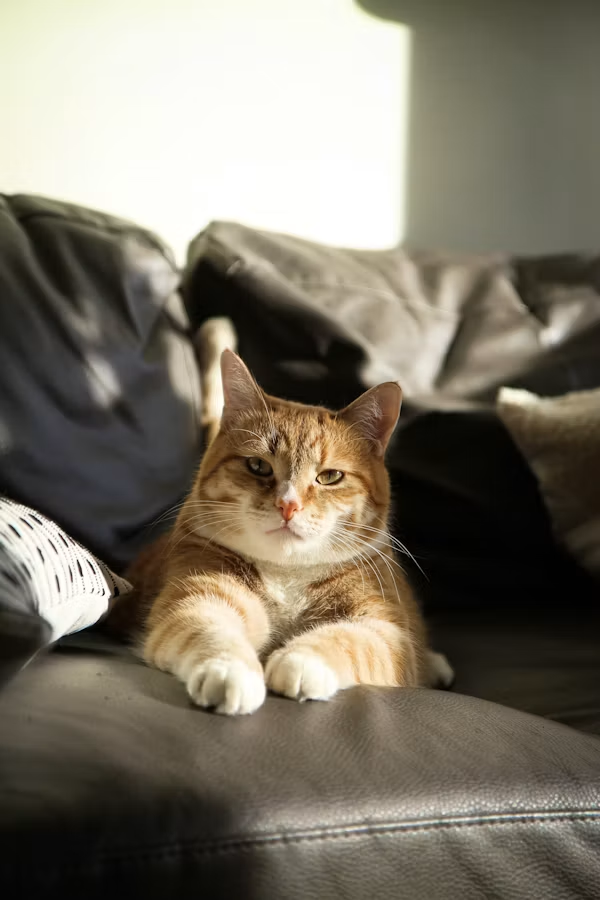
There is something almost impossible to ignore about a cat that seems to be purring all the time.
You sit beside your cat, and it starts purring. You pet it, and the purring gets louder. Your cat settles down for a nap, and there it is again.
At some point, you may start wondering: Why does my cat purr so much?
Purring is one of the most familiar sounds cats make, but it does not always mean exactly the same thing. A cat may purr because it feels comfortable, wants attention, is excited, or is communicating in another way.
Understanding the situation around the purring can tell you much more than the sound itself.
Purring Can Be a Sign of Contentment
The most obvious explanation is also one of the most common.
Cats often purr when they are relaxed and comfortable. If your cat is curled up beside you, has relaxed body language, half-closed eyes, and starts purring while you pet it, there is a good chance it is enjoying the moment.
For many cats, purring becomes part of a comfortable routine.
A favorite blanket, a sunny spot, a quiet afternoon, or time with a trusted person can all create the kind of environment in which a cat feels safe enough to relax and purr.
Your Cat May Be Enjoying Your Attention
Some cats seem to purr more when they are being touched or spoken to.
If your cat comes toward you, rubs against your legs, settles beside you, and starts purring when you pet it, the purring may be connected to social interaction.
Cats have different personalities. Some enjoy constant attention, while others prefer affection in smaller doses.
If your cat repeatedly seeks you out and starts purring when you interact with it, the sound may be part of the way it communicates during those moments.
And if your cat shows affection in other ways, such as licking you, those behaviors can also be part of the relationship you have built together.
Some Cats Simply Purr More Than Others
Just like people have different voices and personalities, cats can have different habits.
One cat may rarely purr. Another may seem to have a motor running almost constantly.
This does not necessarily mean that something is wrong with either cat.
Some cats are naturally more vocal and expressive. Others are quieter and show their feelings through body language instead.
If your cat has always been a frequent purrer and otherwise seems healthy, active, and comfortable, its personality may simply include a lot of purring.
Purring Can Happen When Your Cat Is Excited
Purring is not limited to quiet moments.
Some cats purr when they are excited or anticipating something they enjoy.
You might notice your cat purring when you prepare its food, bring out a favorite toy, or come home after being away.
In these situations, your cat may be experiencing positive excitement rather than simply relaxing.
The context matters.
A purring cat waiting impatiently beside its food bowl is having a very different experience from a purring cat stretched out asleep on the sofa.
Your Cat May Be Asking for Something
Cats can also use vocalization to get a person’s attention.
If your cat starts purring while looking at you, rubbing against you, or moving toward a particular place, it may be trying to communicate a need or request.
Perhaps it wants food.
Perhaps it wants you to open a door.
Perhaps it wants to play.
Or perhaps it simply wants you to notice it.
Purring can sometimes be accompanied by other sounds or behaviors, making the message easier to understand.
Pay attention to what your cat does before and after it starts purring.
Purring Can Be a Way to Communicate
Purring is more complicated than simply being a “happy sound.”
Cats can use purring in different situations, and researchers have suggested that the sound can have several possible functions. The reasons behind purring can vary depending on the situation and the cat.
For example, cats may purr during social interactions with people or other cats. Kittens also purr while nursing, which makes purring an important part of early communication.
This is one reason it is better to consider the entire situation rather than assuming that every purr means the same thing.
Why Does My Cat Purr When I Pick It Up?
If your cat immediately starts purring when you pick it up, it may be enjoying the closeness.
Some cats like being held because they associate physical contact with safety and affection.
Other cats may tolerate being held but prefer to have all four paws on the ground.
Again, body language helps tell the story.
A relaxed cat with soft eyes and a loose body is giving you very different signals from a cat that is tense, trying to escape, flattening its ears, or showing other signs of discomfort.
The purring itself should not be considered proof that your cat wants to be held.
Why Does My Cat Purr When It Sleeps?
You may also notice your cat purring while resting or even appearing to sleep.
Cats can purr while they are extremely relaxed, and some may continue purring as they become sleepy.
If your cat is comfortable, breathing normally, and otherwise behaving as usual, occasional purring during rest is generally not surprising.
It can simply be part of the way your cat settles down.
This is particularly common when your cat has found a favorite sleeping place.
Can a Cat Purr When It Is Stressed?
This is where things become more interesting.
Purring does not always mean that a cat is completely happy.
Some cats may purr in situations where they are stressed, frightened, or uncomfortable. Purring may sometimes function as a form of self-soothing or communication.
That is why you should never judge a cat’s emotional state based only on whether it is purring.
Look at the rest of the cat.
Is the body relaxed?
Are the ears in a normal position?
Is the cat eating normally?
Is it interacting with you as usual?
Does it seem comfortable in its surroundings?
The answers to those questions provide much more context.
When Should You Pay Attention to Excessive Purring?
If your cat has always been a frequent purrer, there may be no reason to worry.
A change is more important than the absolute amount of purring.
If a normally quiet cat suddenly begins purring much more than usual, especially if the change happens together with other unusual behaviors, it is worth paying attention.
Signs such as hiding, changes in appetite, unusual aggression, reduced activity, changes in litter box habits, or obvious discomfort can provide important context.
If you are concerned about a sudden behavioral change, a veterinarian can help determine whether there is an underlying reason.
The purring itself is not enough to tell you what is happening.
Why Does My Cat Purr So Much Around Me?
If your cat seems to save its loudest purring for you, that can be a pretty sweet clue.
Your cat may associate you with food, comfort, warmth, play, affection, or security.
Over time, cats can develop routines with the people they live with. Your voice, scent, movements, and daily habits become familiar.
So when your cat settles beside you and starts purring, it may simply be responding to the environment you have created together.
It does not necessarily mean your cat is trying to tell you one specific thing.
Sometimes it is simply comfortable being around you.
The Context Tells You More Than the Purr
So, why does your cat purr so much?
It may be happy and relaxed. It may enjoy your attention. It may be excited about food or play. It may be communicating with you, or it may simply be a naturally expressive cat.
And sometimes, purring can happen during stress or discomfort, which is why the rest of your cat’s behavior matters.
Instead of asking only, “Is my cat purring?”, try asking:
What is happening when my cat purrs?
That small change in perspective can help you understand your cat much better.
And if your cat spends a lot of time purring beside you, perhaps the simplest explanation is also the nicest one: your cat has found a place where it feels comfortable enough to let its little motor run.