
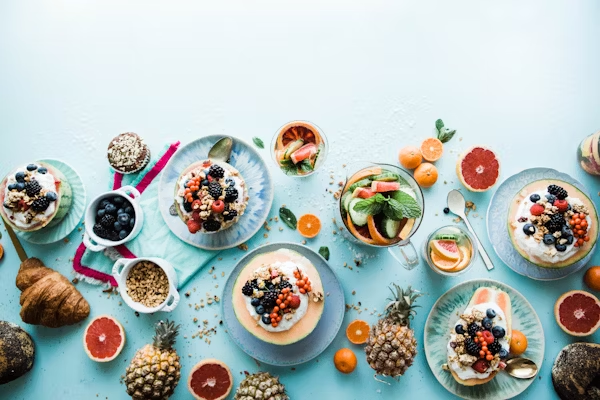
Mindful eating is not a trend—it’s a behavioral shift.
Studies suggest it can:
- reduce emotional and binge eating
- improve diet quality
- increase awareness of hunger and fullness
It can also help reduce stress and improve your overall relationship with food
Eating Slowly Changes Everything
One of the simplest changes is also one of the most powerful:
👉 slowing down
When you eat slowly:
- your body has time to signal fullness
- digestion improves
- you enjoy your food more
This creates a more natural balance—without restriction or control.
How to Practice Mindful Eating Daily
You don’t need a complicated method.
You need small, consistent changes.
1. Remove Distractions
Eat without screens or multitasking.
2. Pay Attention to Your Food
Notice:
- flavors
- textures
- temperature
3. Listen to Your Body
Ask yourself:
- Am I hungry?
- Am I full?
4. Slow Down Your Pace
Take smaller bites. Chew more.
5. Pause During Meals
Give yourself a moment to check in.
The Emotional Side of Eating
Eating is not just physical—it’s emotional.
We often eat:
- when stressed
- when bored
- when overwhelmed
Mindful eating helps break this pattern by increasing awareness.
This connects deeply with
👉 Why Self-Reflection Is Essential for Personal Growth
Because awareness is the first step toward change.
From Habit to Lifestyle
Mindful eating is not something you “do sometimes.”
It becomes part of how you live.
When combined with daily habits, it creates long-term change.
This aligns with
👉 The Power of Small Habits
Because small actions, repeated daily, shape your behavior.
A More Balanced Way to Eat
You don’t need strict rules.
You don’t need perfect meals.
You need presence.
When you eat with awareness:
- you feel more satisfied
- you make better choices
- you reconnect with your body
Conclusion
Eating is something you do every day.
But experiencing it fully… is a choice.
Slow down.
Pay attention.
Listen to your body.
Because when you start to truly experience your meals…
you don’t just nourish your body—
you reconnect with your life.