
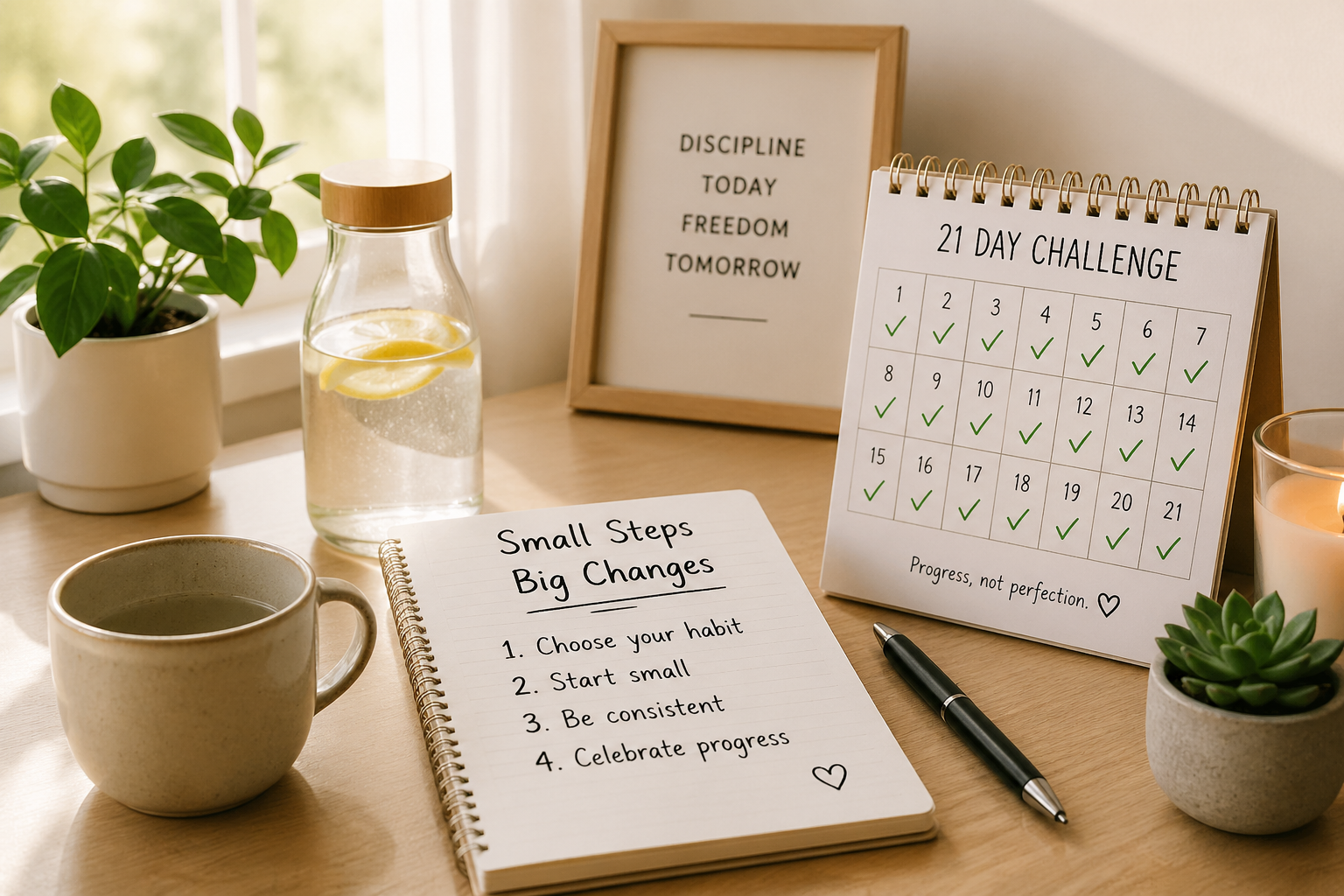
Hey there, habit builder! Ever stared at your to-do list, dreaming of that perfect morning routine, but ended up hitting snooze instead? You’re not alone. Building habits feels like climbing a mountain sometimes. But what if I told you there’s a proven path to make it stick in just 21 days? “This guide combines science, psychology, and simple strategies…”
This isn’t some fluffy promise. It’s backed by science, real stats, and strategies that work. By the end of this guide, you’ll have a step-by-step plan to turn “I should” into “I do.” Ready to transform your life? Let’s dive in!
The Habit Struggle: Why It’s So Hard in Today’s World
Life is chaotic. Notifications ping, work piles up, and Netflix tempts you after a long day. No wonder only 8% of people achieve their New Year’s resolutions, according to a University of Scranton study.
We crave change, but our brains love the familiar. Habits are automatic behaviors that save mental energy. The problem? Bad ones form easily, good ones fight uphill.
Think about it: scrolling social media for hours? That’s a habit wired deep. But flossing daily or hitting the gym? Those need intention.
In the chaos of daily life, emotional balance is key. Check out our guide on mastering emotional balance to stay steady.
The Science Behind Habit Formation: Busting the 21-Day Myth
The 21-day rule comes from Dr. Maxwell Maltz’s 1960s book Psycho-Cybernetics. He noticed patients took about 21 days to adjust to changes. But is it true?
Fast forward to 2009: A study by Phillippa Lally at University College London tracked 96 people forming habits like drinking water or exercising. Average time? 66 days. Some took 18, others 254!
Why 21 days then? It’s a solid start. Habits go through phases: cue, craving, response, reward (shoutout to James Clear’s Atomic Habits). Early days build neural pathways.
According to the American Psychological Association, repetition strengthens these paths. Dopamine rewards reinforce them. Miss a day? No biggie if the chain’s strong.
Stats show consistency wins: 43% of daily actions are habitual (Duke University). Flip that for good!
Your 21-Day Habit Blueprint: Phase by Phase
We’ll use 21 days as a launchpad. Divide into three weeks for momentum. Pick one tiny habit first—like 2-minute walks or journaling three lines.
Week 1: Foundation – Make It Obvious
- Day 1-3: Choose your habit. Specific: “Drink 16 oz water upon waking,” not “drink more water.”
- Day 4-7: Set cues. Place glass by bed. Track in app like Habitica.
Science tip: Implementation intentions (“If X, then Y”) boost success by 200-300% (Peter Gollwitzer study).
Week 2: Momentum – Stack and Reward
- Day 8-10: Habit stack. After coffee, do push-ups. Links to existing routines.
- Day 11-14: Reward immediately. Checkmark + “Great job!” Dopamine hit.
Research from BJ Fogg’s Tiny Habits: Small wins create automaticity.
Week 3: Integration – Scale and Anchor
- Day 15-17: Increase slightly. From 2-min walk to 5-min.
- Day 18-21: Anchor to identity. “I’m a hydrated person.”
By day 21, you’re 80% automatic per early studies. Keep going to 66 days!
Practical Strategies: Tools to Make It Stick
Time for action. These aren’t theory—these work.
1. The 2-Minute Rule
Scale down. Want to read? Read one page. Friction kills habits; remove it.
2. Environment Design
- Hide temptations (junk food in high cabinet).
- Prep cues (gym clothes out night before).
James Clear says environment trumps willpower.
3. Tracking Systems
Use a chain calendar (Jerry Seinfeld method). Don’t break it! Apps like Streaks show 92% retention with visual tracking.
For more on routines, see our building daily routines article.
4. Accountability Hacks
- Tell a friend. 65% more likely to succeed (American Society of Training and Development).
- Join challenges on Reddit or apps.
5. Mindfulness Boost
Cravings hit? Pause, breathe. Links to overcoming procrastination—check our tips here.

Hi, I’m Regina.
I’m a curious person who likes to notice things.
Sometimes it’s a thought that stays in my head all day. Sometimes it’s something I discover, a question I suddenly want to answer, a dream I cannot stop thinking about, or something completely ordinary that somehow becomes interesting.
I created Vida e Palavras as a place to explore all of that through words.
Here, I write about everyday life, emotions, habits, dreams, curiosity, inspiration, and the small things that make us stop and think.
I’m not here to pretend I have all the answers. I’m here to explore, discover, and share ideas along the way.
I hope you find something here that makes you think, feel, learn, or simply pause for a moment.
6. Never Miss Twice
One off day? Fine. Two? Reset. Keeps momentum.
Pro tip: Pair with meditation. Our mindfulness for beginners guide pairs perfectly.
7. Review Weekly
Sunday: What worked? Adjust. Data-driven wins.
Common Objections: And How to Crush Them
“21 days isn’t enough.” True, it’s a start. Lally’s study shows variance, but 21 builds base.
“I always fail.” Normal! 80% quit in first week. Start tiny, persist.
“No time.” Everyone has 2 minutes. Audit your day—cut scroll time.
“Motivation gone.” Habits aren’t motivation-dependent. They’re automatic.
“Plateaued.” Scale up gradually. Plateaus mean growth brewing.
Your New Habit Starts Now: Go Make It Happen!
Congrats—you’ve got the blueprint! Pick one habit, start today. In 21 days, you’ll look back amazed.
Remember: Small steps, big change. You’re capable. Track progress, celebrate wins, and build that future self.
Share your habit in comments. Let’s cheer each other on!
“If you found this helpful, explore more articles on building emotional balance and daily habits.”