
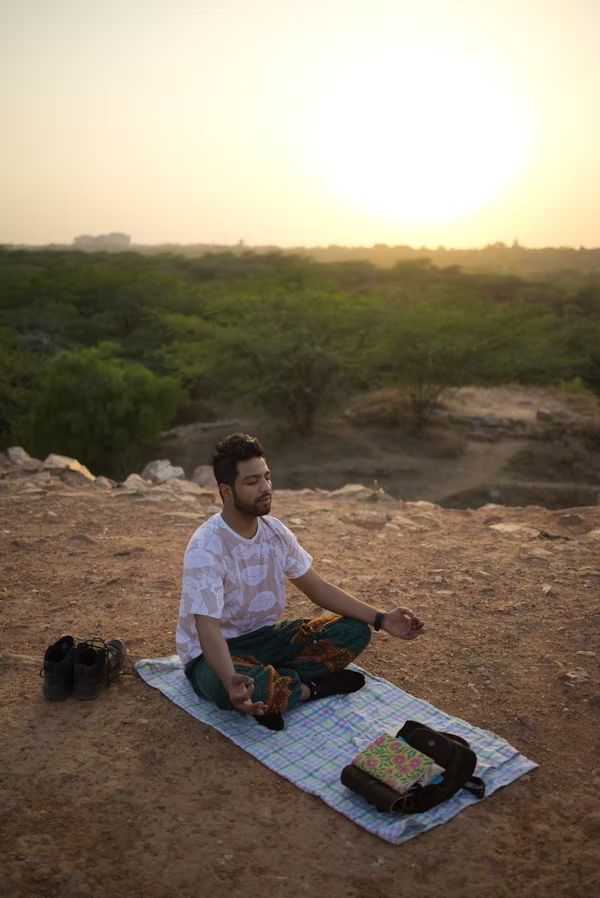
Introduction
Have you ever felt overwhelmed by your emotions…
like they were controlling you instead of the other way around?
Stress builds up.
Thoughts don’t stop.
Reactions happen before you even realize it.
Now imagine being able to pause — even in difficult moments —
and respond with calm and clarity.
This is where mindfulness becomes powerful.
It’s not about eliminating emotions…
but about learning how to experience them with awareness and balance.
What Is Mindfulness?
Mindfulness is the practice of paying attention to the present moment — without judgment.
It means:
- Being aware of your thoughts
- Noticing your emotions
- Observing your body sensations
Instead of reacting automatically, you become more intentional.
Research shows that mindfulness helps reduce stress and improve emotional well-being by changing how the brain processes emotions
How Mindfulness Creates Emotional Balance
Emotional balance doesn’t mean always feeling good.
It means being able to experience emotions without being overwhelmed by them.
Mindfulness helps by:
🧠 Increasing awareness
You recognize emotions as they arise
⚖️ Reducing emotional reactivity
You pause before reacting
🌿 Promoting acceptance
You stop fighting your emotions and start understanding them
Studies show that mindfulness training improves emotional regulation and reduces negative emotional responses
The Science Behind Mindfulness and Emotions
Mindfulness changes how your brain works.
Research has found that:
- It reduces activity in the amygdala (fear and stress center)
- It strengthens the prefrontal cortex (decision-making and control)
- It improves emotional processing and reduces emotional intensity
More recent studies also show that meditation can alter deep brain areas linked to emotional regulation and memory
In simple terms:
👉 Less reactivity
👉 More control
👉 Better emotional balance
Mindfulness and Emotional Awareness
Mindfulness naturally increases emotional awareness — a key skill for mental well-being.
When you practice mindfulness, you:
- Notice your emotions earlier
- Understand their triggers
- Respond instead of reacting
This is strongly connected to emotional intelligence and healthier relationships.
To explore this deeper, read:
👉 How to Improve Relationships Through Emotional Awareness
The Role of Breathing in Mindfulness
Breathing is one of the most powerful tools within mindfulness.
It helps anchor your attention in the present moment.
Slow, conscious breathing:
- Calms the nervous system
- Reduces anxiety
- Improves mental clarity
If you want to go deeper into this connection, check:
👉 The Science Behind Breath and Mental Clarity
👉 How Conscious Breathing Reduces Stress and Anxiety
👉 Mindful Breathing: A Daily Practice for Emotional Stability
Practical Ways to Develop Mindfulness
You don’t need a complex routine.
Start simple:
🌿 Focus on your breath
Pay attention to each inhale and exhale
🧠 Observe your thoughts
Notice them without judgment
⏱️ Create small pauses
Even a few minutes a day can help
👣 Be present in daily activities
Eating, walking, or resting can all become mindful moments
Even short daily practices have been shown to improve mood, reduce anxiety, and enhance attention over time
Mindfulness as a Daily Habit
Mindfulness is not something you do once.
It’s something you build.
With consistency, it can:
- Reduce emotional instability
- Improve resilience
- Increase inner calm
You can strengthen this by combining it with:
👉 How Small Daily Habits Can Improve Mental Health and Emotional Balance
👉 Simple Habits That Can Strengthen Your Mental Well-Being
A More Human Perspective
Mindfulness doesn’t remove stress from your life.
But it changes how you relate to it.
Instead of being carried away by emotions…
you learn to observe them.
Instead of reacting impulsively…
you create space.
And in that space, something powerful happens:
You regain control.
Conclusion
Emotional balance is not about avoiding difficult feelings.
It’s about learning how to experience them without losing yourself.
Mindfulness offers a simple, natural, and science-backed way to do that.
One breath at a time.
One moment at a time.
And over time…
those moments change everything.

Isabella Duarte is the creator of VidaePalavras, a blog dedicated to lifestyle, emotional well-being, and personal growth.
She is passionate about exploring simple and practical ways to improve daily life, focusing on habits, mental clarity, and balance.
Through her writing, Isabella shares reflections and actionable ideas to help readers reduce stress, build healthier routines, and find more meaning in everyday moments.
All content published on this blog is for informational purposes only and is based on personal research and experience.